
I’m a little bit ‘Vania, I’m a little bit S’rvival Horror

Metroidvanias are a genre that have historically been hit or miss for me. And what better time to review a game that is part Metroidvania and part Survival Horror, than just on the cusp of a new Castlevania release! I dig the aspects of exploration, discovery, and progression, but find myself getting frustrated by the amount of backtracking for the sake of backtracking—I need something more going on.

Certainly some of this genre more offending than others, and we have been blessed by a glut of games in the last ten years or so—Animal Well (one of the best examples of a game rewarding experimentation in recent memory), the Ori games, Hollow Knight/Silksong to name a few. And then there are the genre-defining greats from years past—I have fond memories of my first times playing through Symphony of the Night, Cave Story, and Shadow Complex.
Understand my palpable excitement when I first discovered the trailer for Silver Pines, which appeared to merge survival horror (probably my favorite genre of all time) with the ever-elusive-supremely satisfying Metroidvania experience. It also appeared to roll the dice on the 2.5D aspect, something that I remember first experiencing way back in 2009 with Shadow Complex.
After around 15 hours with Silver Pines, I’m happy to say it exceeded all of my expectations, delivering exciting Metroidvania discovery and rewarding exploration, while also bringing the scares, and some pretty solid shooting as well.
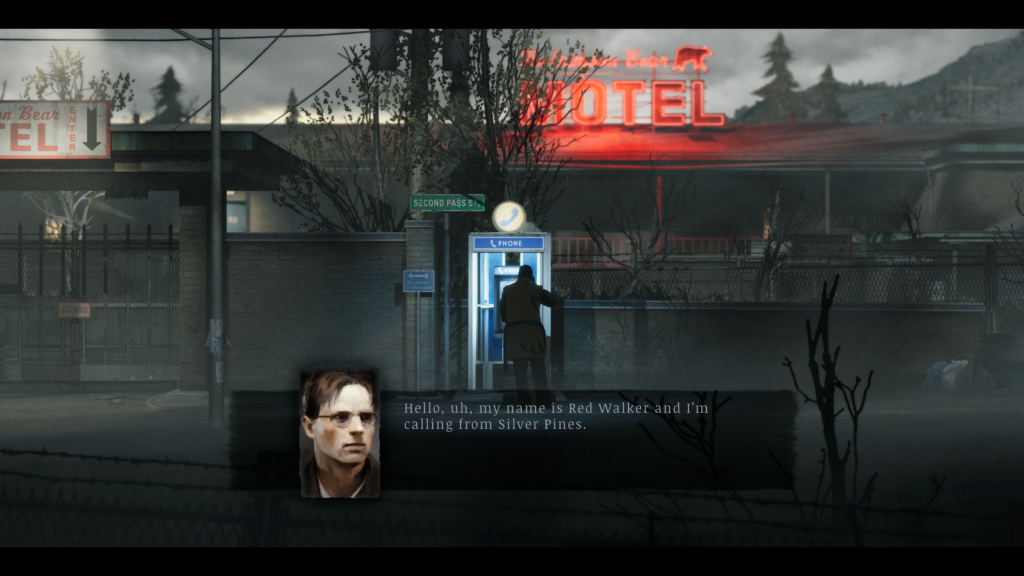
The set up couldn’t be simpler: You awake at a diner table, and via phone call discover you are a private detective—Red Walker—who has been dispatched to the quaint town of Silver Pines by an unnamed patron. Your mission: to track down a rocker named Eddie Velvet who has gone missing

Right away the game sucked me in with the pay phones—they’re how you save your game and periodically complete parts of puzzles. Oh, and you can check the coin return slot!!! Flashbacks to young me scurrying around the arcade, surely underfoot, plugging my fingers into what must have been plague ridden coin returns, and frantically pumping the buttons of others. Seriously, checking these coin returns was a tactile memory link that NEVER.GOT. OLD.

It does cost to save, and money will become an important resource going forward, so you’ll want to dip your hot little hand into every duffle bag, coat, locker, car trunk, and everything in between looking for that sweet coinage. Periodic vending machines offer you a chance to purchase heals, bullets, and sometimes other surprising things.
You start with nothing—no weapons, no flashlight, nada, and very quickly find yourself fleeing from something dark and nasty that’s roughly human shaped. Hand meet box cutter, you’ll become good friends by the time you find an upgrade. The amount and variety of weapons on offer is impressive, and by the end of the story, you’ll have enough of an arsenal to pull off a coup in a fictional South American country. The reloading mechanic is also neat, as it’s kind of an active time mini game. Some might find that annoying, but I think it adds verisimilitude to the unfolding horrors.
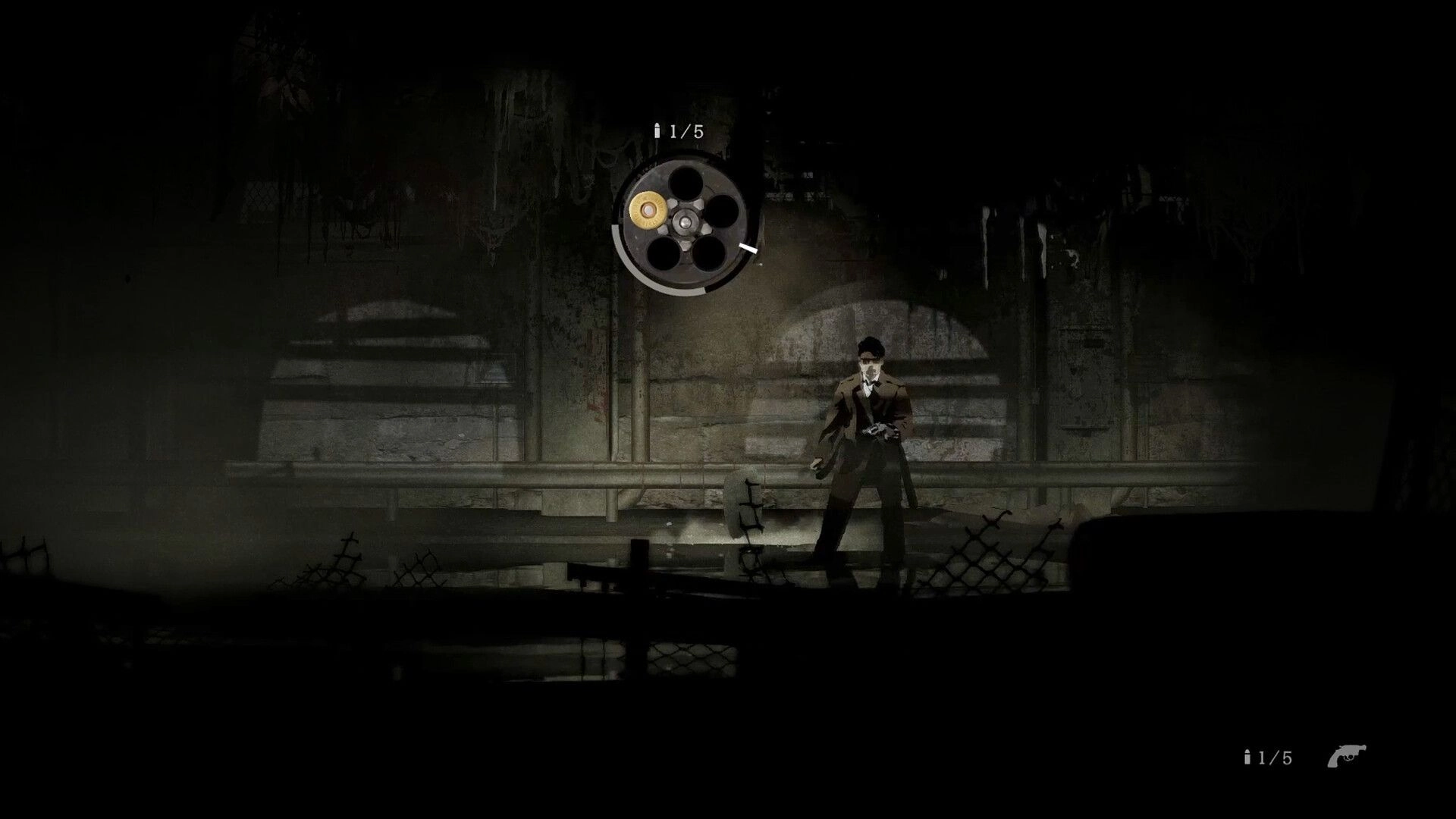
Let’s talk looks: the game is G O R G E O U S. From the weather effects, gusts of wind shaking everything around you, to the spatters of rain that drip down the camera in front of you, your immersion is assured. The town and surrounding wilderness appears to be Pacific Northwest-ish or coastal Maine-ish in vibe. The graphics have a comic-booky, cell shaded look that really excels in the creepier moments of the game. You’ll be reminded of the game’s influences—Silent Hill, Twin Peaks, Alan Wake—with each corner you turn. And it is very worth your turning that corner.

One of the things the game does best is cram things into every nook and cranny. Red can jump and crouch, two things you should be doing everywhere it looks like you can or can’t. I lost count of the number of times I was fighting a monster, retreated in panic, accidentally hit the crouch button, and found a hidden chamber. And it all makes sense. Many times you’ll be able to see the next juicy upgrade or collectible hanging in a tree, just out of reach, or behind a locked door that doesn’t have a readily apparent method of opening. But if you look at the map and think about it for a few minutes, you can trace how you could get there and then try it out.
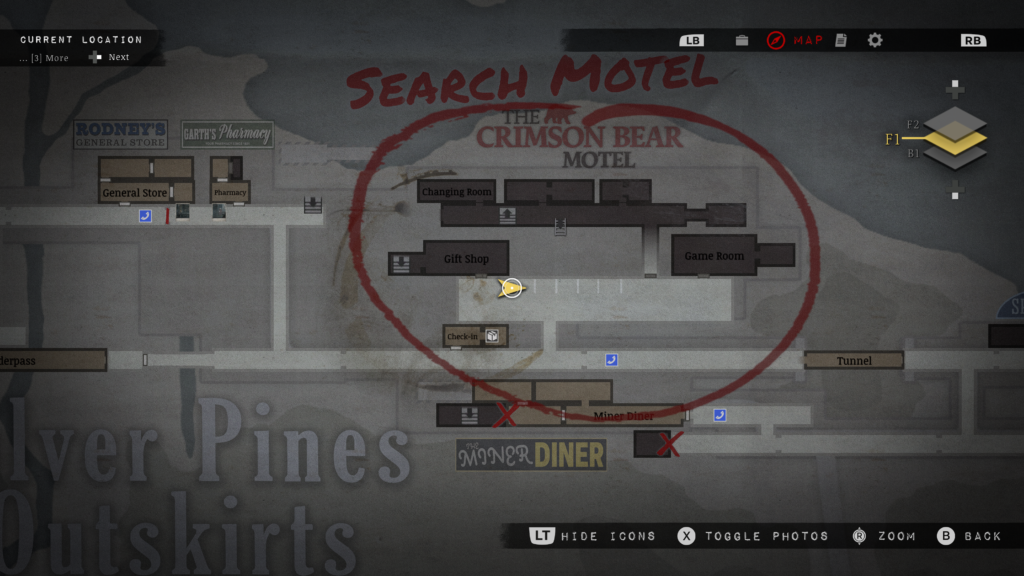
Metroidvanias are nothing without their maps, and the map in Silver Pines sets itself apart. Probably the coolest thing you can do is take pictures with a polaroid camera, which will then automatically be attached to the map, where you took them. How sweet is that? And it comes in handy all the time.
Finally, let’s talk story. If you’ve played any of the games I mentioned above that Silver Pines was clearly influenced by, you won’t find anything new here. I liked all three of the endings, and thought they did a good job of being just cryptic enough. I could have done with batshit insane UFO ending ala Silent Hill, just for fun. But ultimately, Silver Pines manages to wear its influences on its sleeves and consistently meet their level, and sometimes rise above.

