We’ll be friends forever, right?
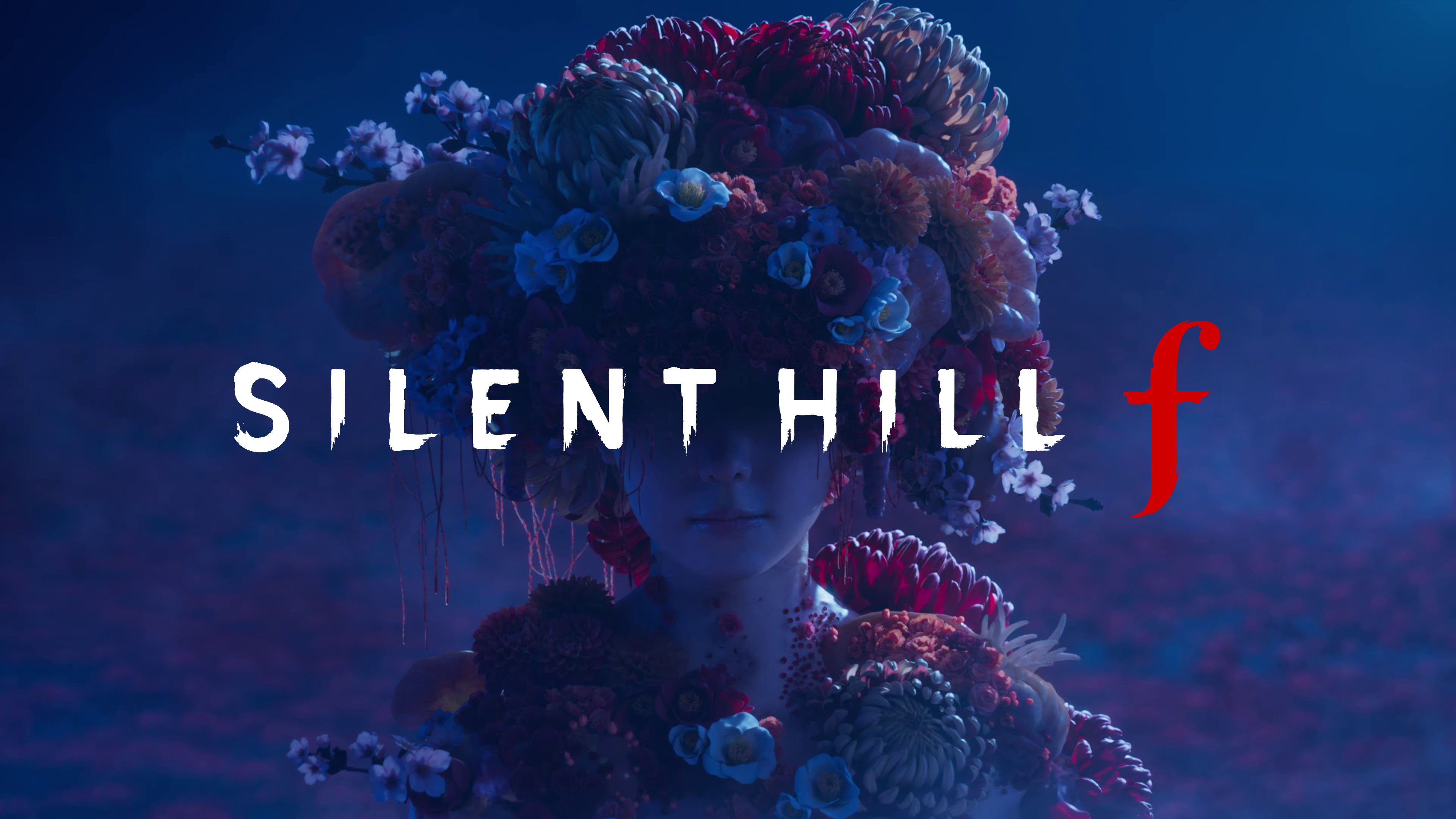
Let’s start off with an exercise: What does the f in Silent Hill f stand for? I finished my playthroughs of the game several months back, but this question has lingered. I’ve resisted the urge to consult the oracle, i.e. Google so far, but the time is upon us. Let’s get down what I have come up with and then see what the oracle tells us.
Based on my understanding of the game and the themes therein, here’s what I’ve got for you: friendship, female, family, festering, familicide, fear, forgotten, fearless, facades, fatalism, feminine/femininity, faces, failure, fake, flowers, fangs, fellowship, fog, and fox. Now *laces fingers together not unmenacingly* let’s consult the oracle!
From google: Popular Meanings and Theories
Fog: Fog is a classic, defining element of the Silent Hill franchise that returns in this entry.
Forte (Loud): The letter uses the musical symbol ƒ, which means “loud” or “strong” in Italian. This creates a dark contrast with the word “Silent” in the title. As discussed on GameFAQs, many fans lean toward this musical term.
Flower: Red spider lilies cover the town and characters in the game’s promotional trailers, symbolizing beauty and horror.
Fox: Fox masks and statues are major recurring motifs throughout the story and Japanese folklore elements.
Femininity: The game is set in 1960s Japan and explores the heavy societal pressures and expectations placed on women during that era.
OK! I’m somewhat ashamed I didn’t even catch the italicized f standing in for forte, having taken band for several years, a few of which were taught by my middle-school-band-teacher father. Yet another great interpretation I hadn’t considered. But overall, I’m going to count that as a win—thanks $50,000 liberal arts degree!
Let’s get it out of the way early: I thoroughly enjoyed Silent Hill f, but came away with mixed feelings. After much rumination, I think these feelings largely come from the change in setting: every other Silent Hill (that I am aware of) up to f had been set in America, usually, but not always (looking at you 4) in a smallish town. I do not feel Silent Hill needs be exclusively set in some approximation of America. Rather, I think that the small-town aesthetic, culture, and everything else balled up within Twin Peaks are things that are familiar to me. Hey, there’s another f. In other words, I speak that language, so there is some familiarity.

Most of the best-known-and-loved entries in the Silent Hill series (I’m thinking 1-4) were created by Japanese developers. The others have pinballed all around the globe. Developed by NeoBards Entertainment headquartered in Hong Kong, f keeps that trend going. My initial impulse was something like “Oh, hey, does this mean this is the first truly Japanese Silent Hill?” Then the research shows its origin not as Japan, but Hong Kong, somewhat close geographically, and potentially culturally, but I’m going to go ahead and say the taking the monolithic view of something as ancient, complex, and multifaceted as Asian culture, is just wrong.
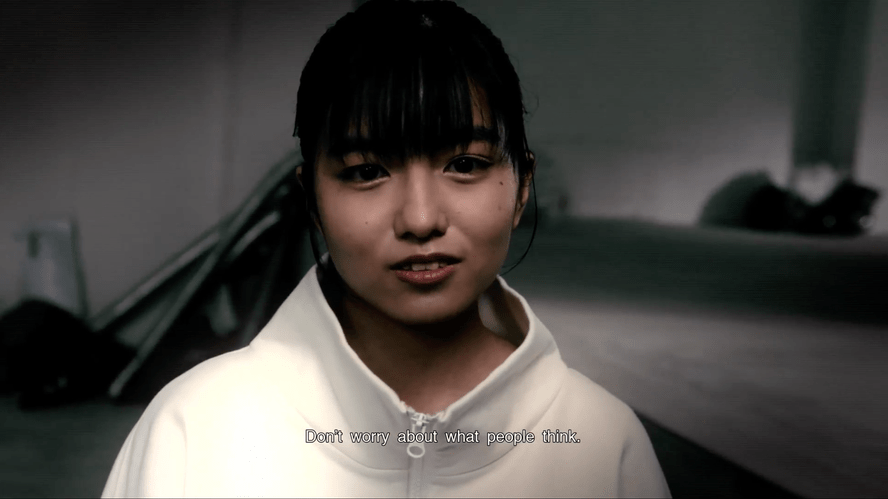
f starts off in much the same way as some of the best in the series: a protagonist wondering through a 1960’s town, Ebisugaoka, that seems somehow juuuuuuuuust on the wrong side of right. You play as high schooler Hinako, who along with her three friends—Shu (the crush), Rinko (the friend who has a crush on your crush), and Sakuko (slightly odd, spiritual friend whose family runs the local shrine)—get sucked into the fog-filled nightmare.

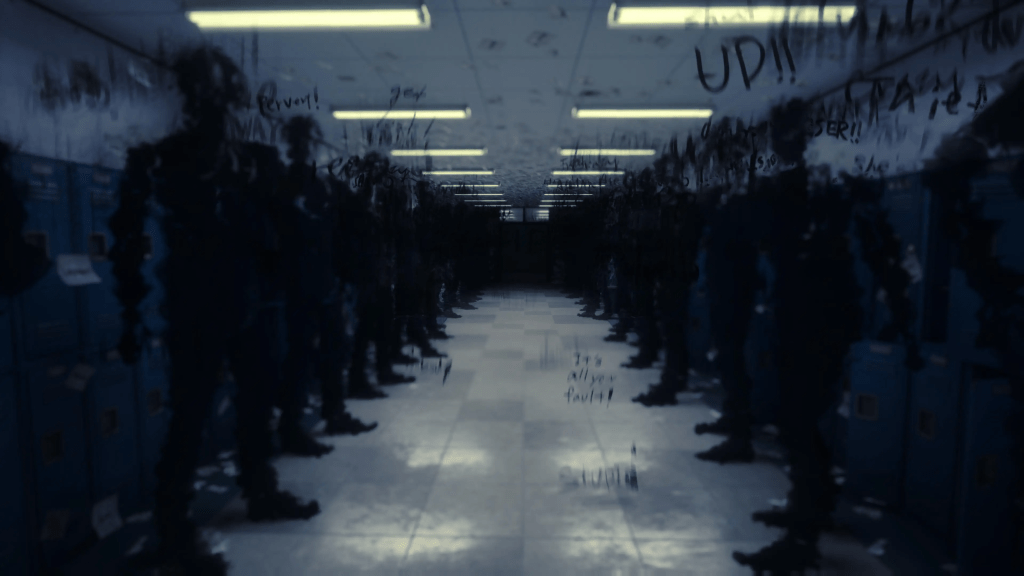
The doesn’t sugarcoat your situation: Your father is openly and clearly an abusive drunk, your mother a subservient enabler, your sister has recently married and left the home. So what does all that mean for Hinako? That’s largely the question the game explores. Will you follow the precedent set by your mother and sister? Perhaps break the cycle and do something different? If that was your chosen path, what would it take? How far would you go? Very early on in the game, your best friend Shu innocently enough hands you a red pill to help your headache. Without spoiling anything, this small act has dire consequences, and the more you play, and the more endings you reach, the revelations just might devastate you.

There’s a ton of shit that goes down. You’ll spend time in a dark realm guided by a foxy (literally) guide who seems nice enough. Be (forcibly, willingly?) transformed into a hybrid horror, eventually come full circle and face your parents. Some of these twining paths is where I struggled to keep up. I saw all the endings, and the more I played, the more I was able to lock in faces with names and get the click moments, but there were times in my first playthrough where I wasn’t sure what the fuck was happening.
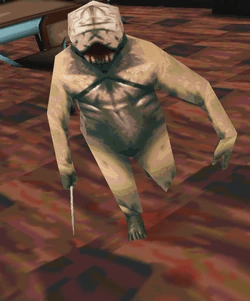
What the game truly excels at is how compellingly unsettling it is. Eventually you run back into Hinako’s sister, Junko. Take a look at her and tell me it doesn’t make you want to run screaming.
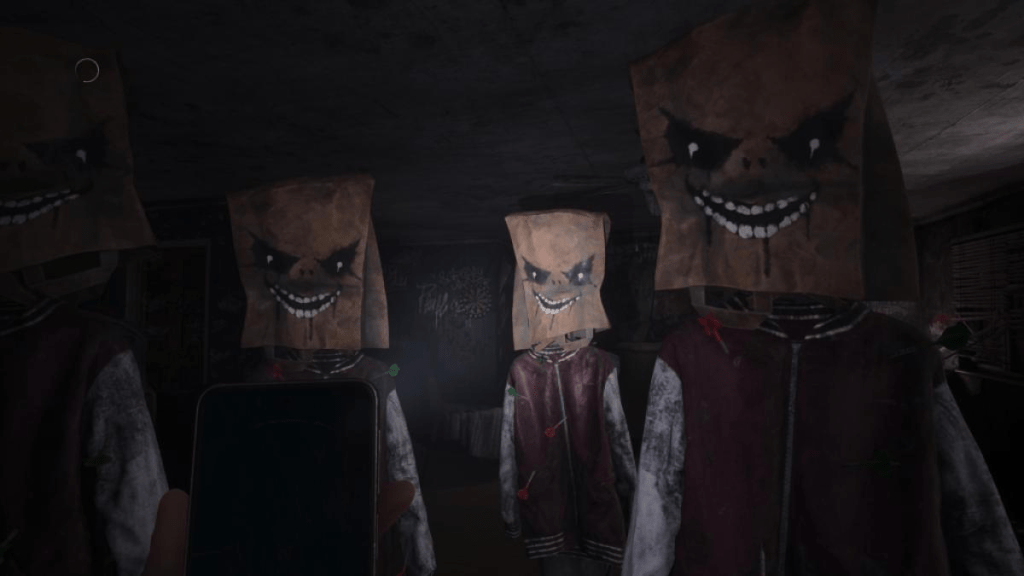
She shows up and acts like nothing is out of place, like there’s nothing wrong with the way she looks, let alone with the entire town that has been subsumed by crimson fungus, and is instead concerned with the path that Hinako is following. Goddammit, I need to type faster to get that image off my screen. The monsters and other characters (their real faces, that is to say) all follow suit and will make your skin crawl. Average enemy variety is quite good and manages to riff on the Silent Hills that came before, while putting a unique twist on it.
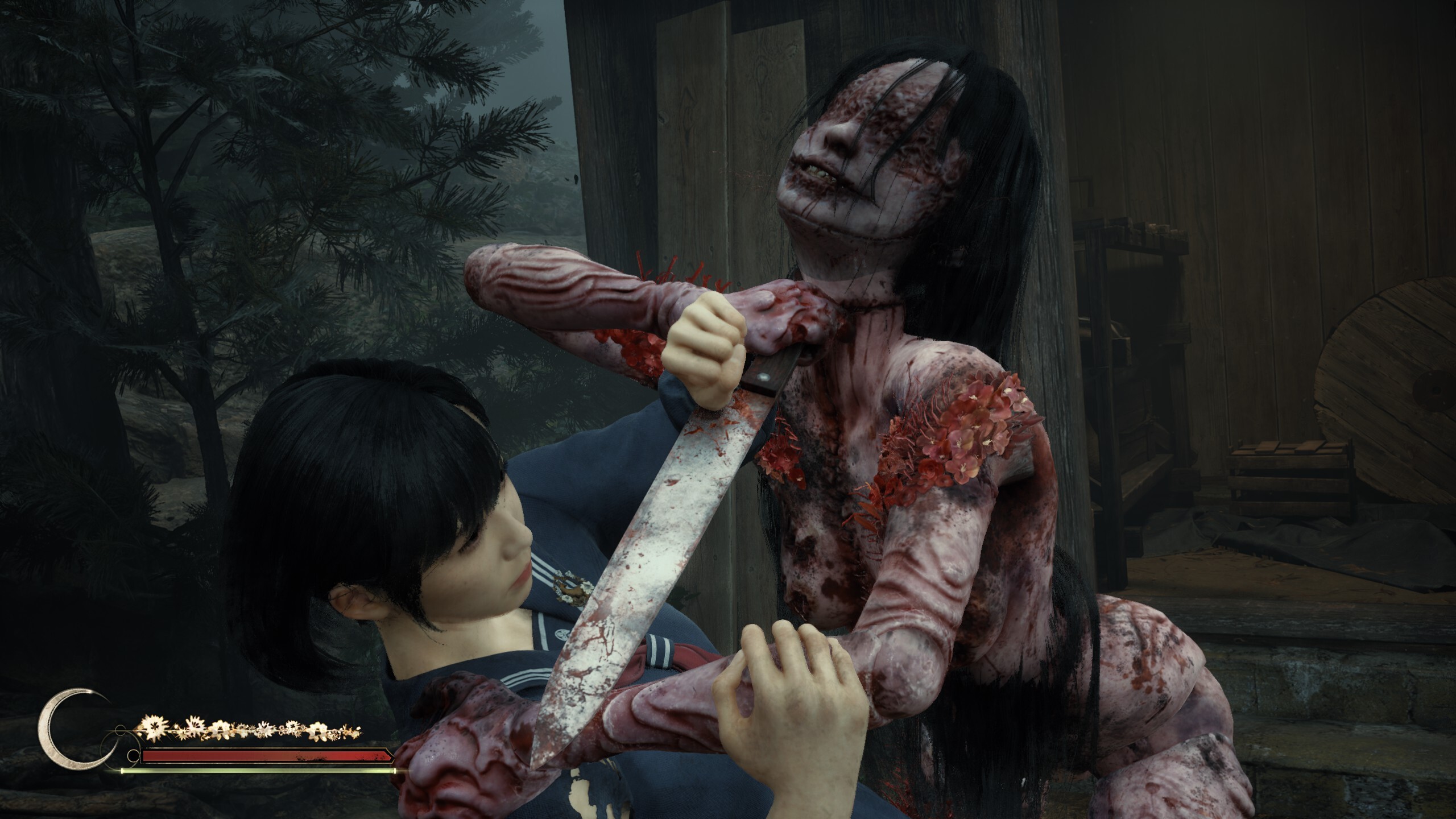
Combat divided some fans, from what I saw. I enjoyed it, but it did take some getting used to. It’s closer to a stamina-block-parry system of a Souls game than what I was used to in other Hills games. It’s all melee, so don’t count on finding any handguns, shotguns, or rifles along the way.
About halfway through the game something really interesting happens: in the dark realm you have surgery and are the recipient of what appears to be a shiny new werewolf arm! These scenes of body modification were some of the most brutal in the entire game, entering the stomach-turning-look-away territory. But these modifications empower you, and combat, for these sections at least, become significantly easier. In the moment, these sections were an appreciated break from the hard scrabble resource scrounging of the earlier sections. You can heal for God’s sake! These change up the formula, but in what I think is a great way. And it truly fits in with the overarching themes in a neat way.

Puzzles don’t disappoint in any way, and there is a nice variety in difficulty without too brutal of spikes. I do think some of the ending-affecting puzzle actions you can take are maybe a bit too cryptic for how large of an impact they end up having, but that’s a minor gripe.
Probably the only thing that I felt was lacking in the game was the music: It takes a different approach, like the rest of the game, and while there are moments of that ole SH religion, it left me wanting more. The most memorable stings and bits were from the horror sections, and those certainly were effective. But probably the most impactful and memorable aspect of Silent Hills of yore were the quieter segments, wandering around a foggy area, unthreatened and entranced by the Yamaoka tunes. It’s like the Lord of the Rings Movies: they’re great. But I’d go sit in a theater just to listen to the soundtrack.
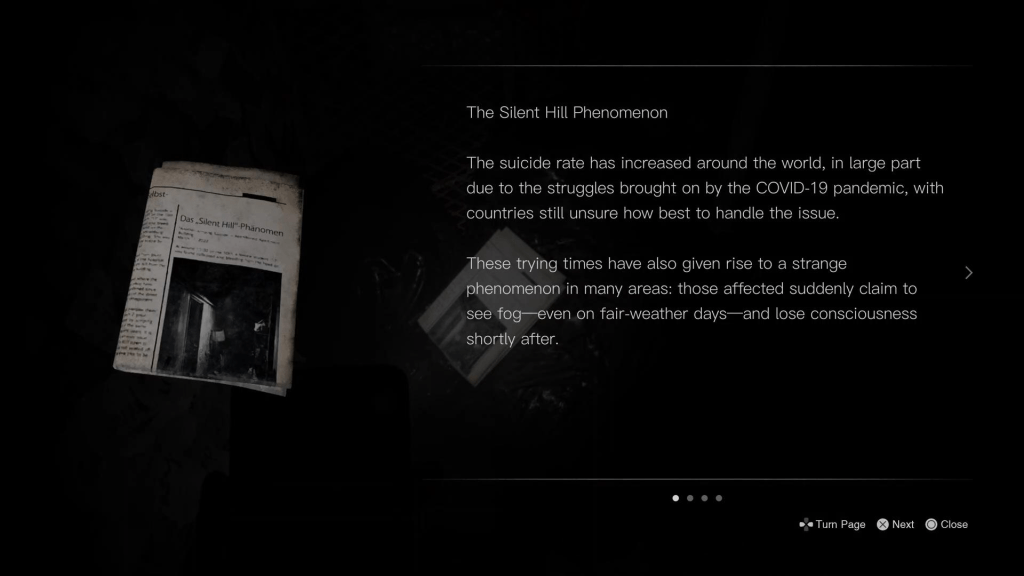
The game does a decent enough job of providing cultural context through found notes and story sections, but something I think would have been amazing to have as a westerner would be a commentary mode, something that I think has been done before, but certainly isn’t common. Maybe have a prompt pop up periodically so you can listen to an explanation of something that’s happening in the game, especially for things that audiences from elsewhere might not grasp just based on context clues.
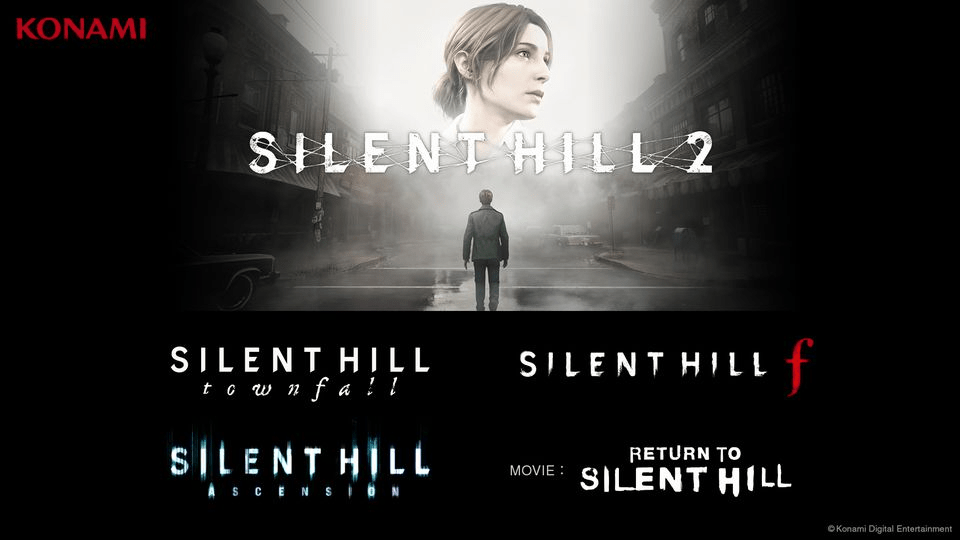
At the time of writing this, a new Silent Hill, Townfall, has just been released! This one is also set somewhere other than small-town America, and I’m here for it. In theory, I love what Konami is doing with the SH franchise. I won’t go so far as to say any new SH is good SH. I feel like we’ve been through that already. But the approach of smaller, more focused narratives set in new and interesting places really interests me, and I think fits particularly well with SH. I’m cautiously optimistic for the next few years in the foggy confines of SH.