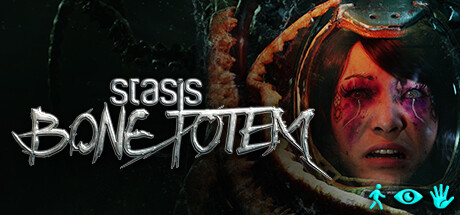
I can’t seem to stay away from entertainment containing the word “bone.” Bone Tomahawk, Bone Thugs, “No Bone Movies.” It’s undeniable. I vaguely recall seeing something come through my news feeds years ago dealing with the original Stasis. I’m not a big PC gamer (though more and more I feel I’m missing a huge segment of innovative works as a result) so I didn’t pay too much attention, other than the usual “Oh. Cool title. Sounds rad.” The original Statis takes place in space where as many will know by now, no one can hear you scream. Twenty-twenty-three’s Stasis: Bone Totem ditches the cosmos for something much scarier and closer to home: the bottom of the ocean.
When live gives you lemons…
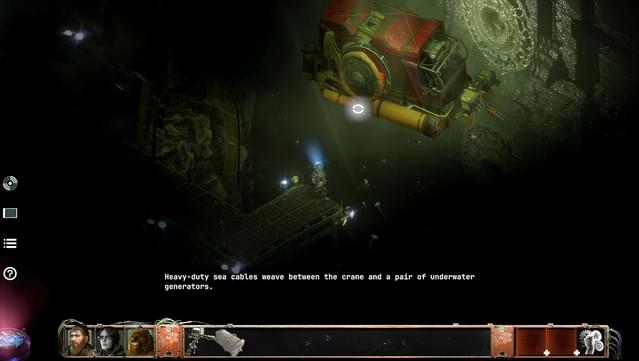
The setup is simple: You’re a broken family struggling to make a living in a cyberpunkesque world. You take control of husband and wife team Mac and Charlie as they discover what appears to be an abandoned oil rig. They must explore further before any serious thoughts of salvage rights can be realistically pondered. This is an adventure game in the classic style through and through. You’re going to be picking up everything that isn’t nailed down and racking your brain as to how each item can be used or combined to keep you moving through the story. The ability to switch between characters is a nice feature, and one that was utilized several times throughout my playthrough to add in surprising narrative touches. Each character will have different thoughts/comments on each item as you rotate through. Sometimes, these thoughts will give you hints or story information. Neat!
Ah yes, the trusty quick access bar at the bottom of the screen!
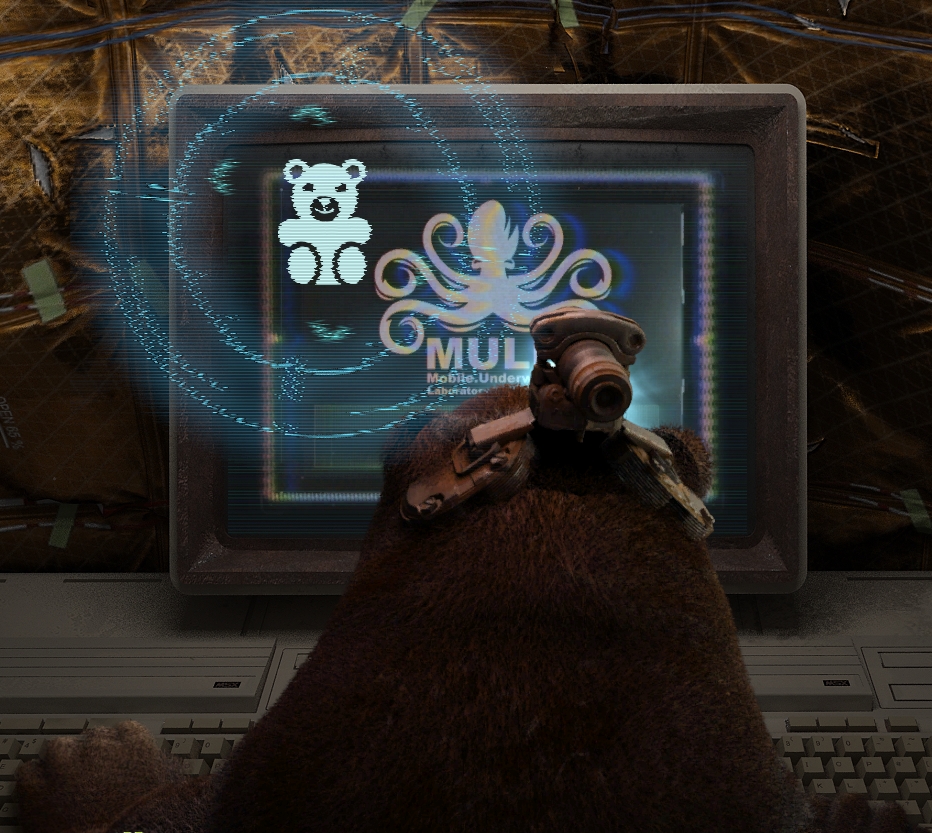
Very shortly after beginning, you gain access to another playable character: the best friend/animatronic bear of your dead daughter. Zang! What a pitch! The bear’s name is Moses, but goes mostly by Mose. One of the things I enjoyed most about this game was its commitment to subtle storytelling, the willingness to stretch things out and let them breathe as you continue along your journey. The voice acting was a big part of this, and ended up being much, much better than I expected when I set out on my journey. Moses in particular brings the gravitas and emotion time and time again.
You are the best and smartest bear! I’m not crying.
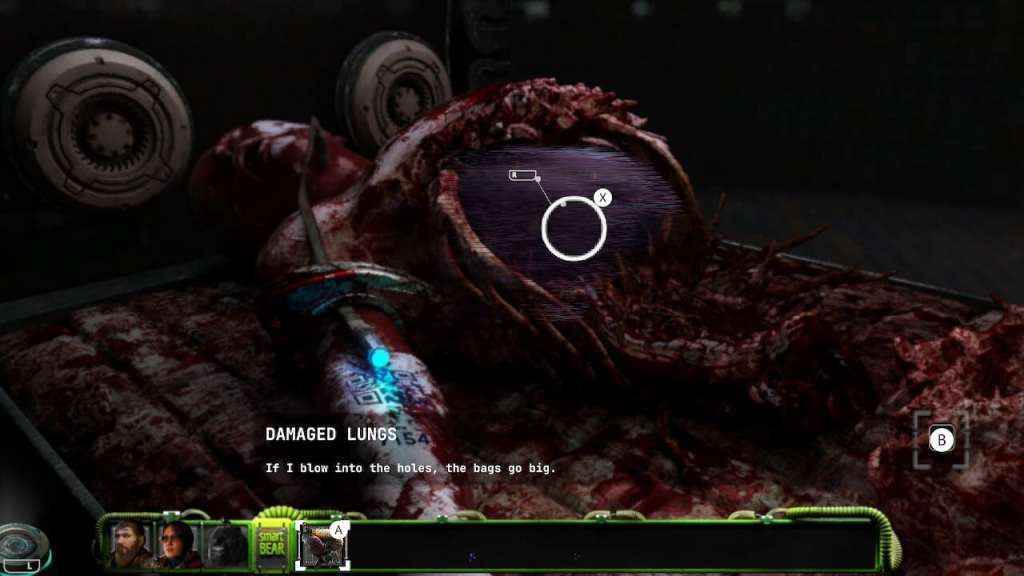
In a nutshell the story goes like this: our intrepid adventures stumble into unknown horrors and end up having to push through to get out. And these horrors get pretty seriously messed up pretty quickly. You get your garden variety eviscerated corpses, darkened corridors sheltering nefarious pulsings, you know. But there’s a lot I didn’t expect. The level of world building on display is honestly remarkable. As mentioned, cyberpunk is the closest descriptor I can throw at this thing: you’ll find logs from people discussing implants, evil corporations, sci-fi tech, and a lot more. But the complexity given to things like the religions and cool historical references is awesome.
Jenova?
This being an adventure game with a capital A, lets talk puzzles. I’m someone who tends to do OK up to a point with adventure games. Day of the Tentacle? I made it through pretty much on my own. The Secret of Monkey Island? Not only did I have to look things up, I found myself routinely asking how in the hell anyone know to do these things. I guess the adventure gamers of old were made of different stuff! Bone Totem managed to give me challenges throughout, but never became frustrating. As is normal in this genre, a close, careful study is mandatory.
Uhhh, eww.
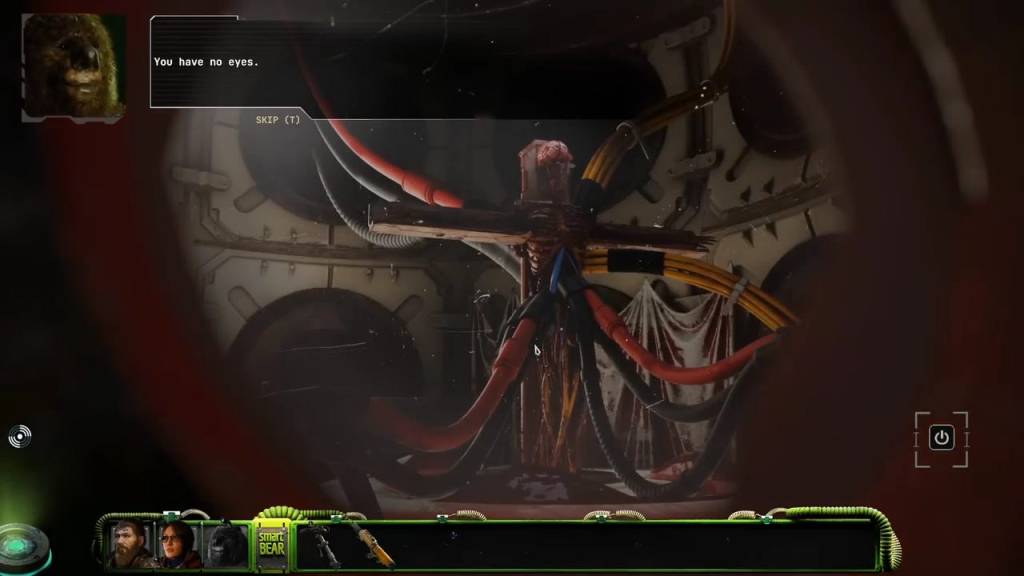
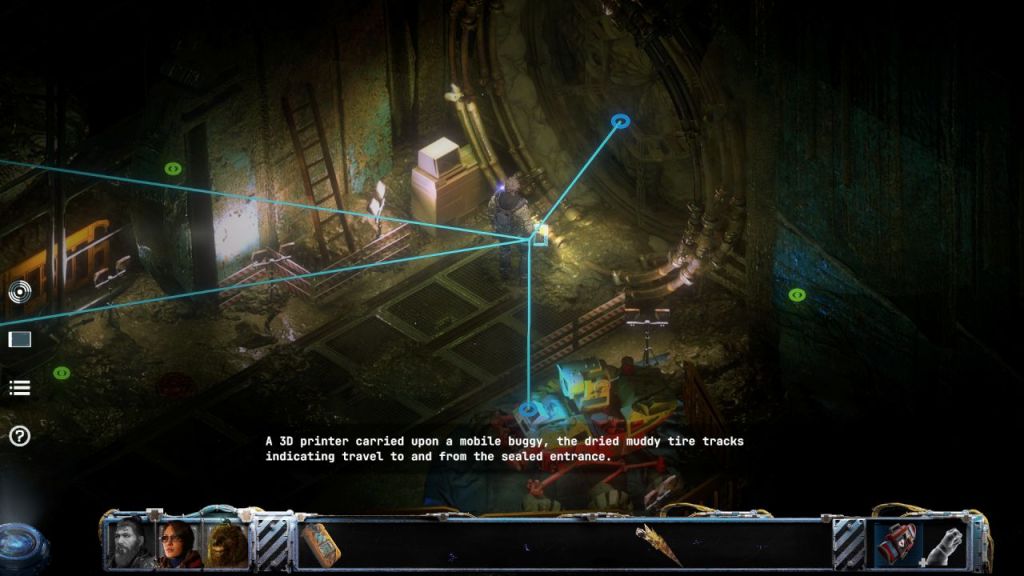
The only minor gripe I came away with had to do with the environmental descriptions, not the writing—most of which were well written and atmospheric—but the way in which you interact with then. As you tool around, there are points of interest that you can highlight. I played on PS5, and the only way to get these to pop up on screen was to point your character at them. Really cool in an immersive world way, but in practice I found that sometimes I couldn’t find the correct angle to read the flavor text.
I feel a bestial need to discover what horrid descriptions those green eyes are hiding.
Graphically, the game is surprisingly well done. Watching the credits roll at the end further reinforced this – the game was largely made by two people! In an world of increasingly mammoth games with sprawling playtimes, it was a breath of fresh air to play something tight and punchy. I’ll definitely be going back to play the original Stasis in the coming weeks. Oh yeah! The deaths. The game has a fun system where there are a handful of achievements for finding character deaths. I haven’t been excited by cutscenes since I was in junior high playing Final Fantasy VII, but seeking these out was awesome.
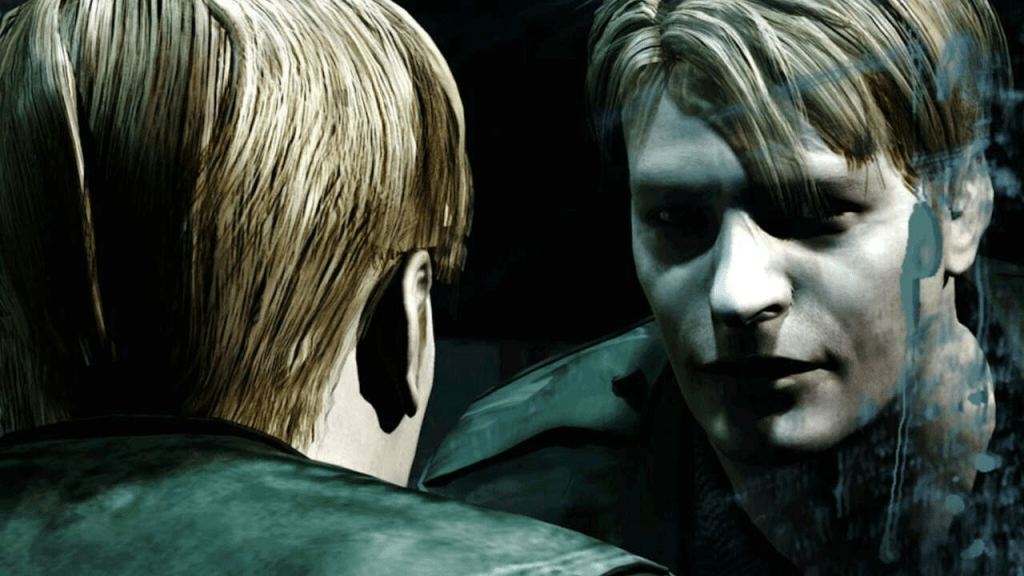
Silent Hill has a mixed history: the longer the series has gone along, the more mediocre the overall results become. The first four games in the catalogue are perhaps stronger than any four entries in any other franchise, across any medium. The original Silent Hill introduced a generation of unsuspecting gamers to a different kind of horror: heavy on the existential and lighter on everything else. Of course, Silent Hill 2 is a paragon of the genre, unsurpassed even to this day, 20+ years after its initial release. Not only one of the best survival horror experiences ever, it belongs in the uppermost tiers of video game royalty. Here was a game that tackled mature, complicated themes in a mature and complicated way. Remember that as we go forward.
Silent Hill? Is that you in there?
Silent Hill 3 had an impossible task that it somehow managed to live up to: function as an effective sequel to one of the greatest games of all time. And of course, the black sheep of the family, Silent Hill 4: The Room. Divisive among some gamers for taking a different approach, it also managed to be a memorable, effective entry.
This scare lives in my horror DNA for all time
The rest of the catalogue is…mixed. You’ve got Silent Hill: Origins, a prequel to the first game. I haven’t played through this one yet, but it seems to be more positive than negative. Silent Hill: Homecoming, essentially a remixed version of the themes of Silent Hill 2 that on its own floundered. And Silent Hill: Downpour, a game with a bland main storyline but amazing optional content and overall setting. Of course, no discussion of Silent Hill would be complete without the obligatory P.T. mention. Noteworthy perhaps for being the face that launched the first person survival horror revolution, its unreal promise of Del Toro and Kojima hijinks sadly never went beyond the demo phase.
With the last mainline entry, Downpour, coming out way back in 2011, what happened between then and now? Radio silence for the most part. Until within the last few years Konami announced their renewed commitment to the franchise, starting with a remake of Silent Hill 2 and bleeding off into several other properties.
Any Silent Hill is good Silent Hill, right?
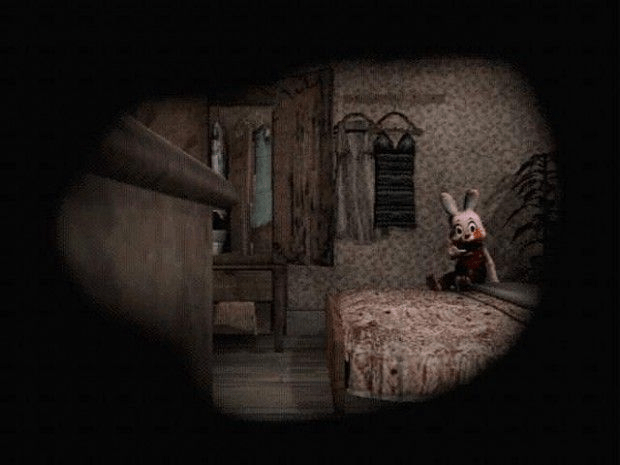
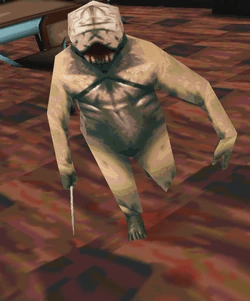
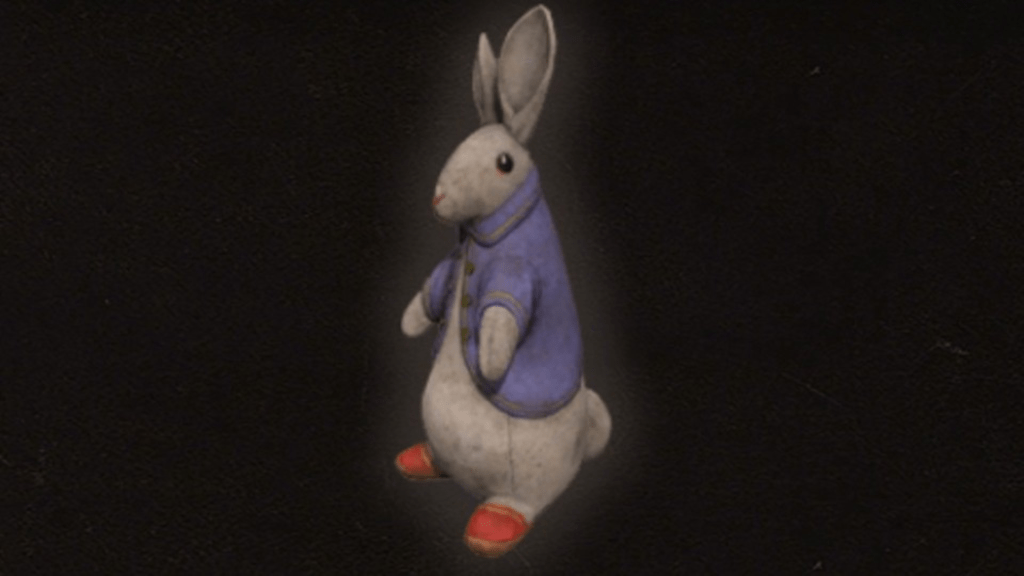
Before diving into the successes and failures of The Short Message, I think we need to pause and reflect on just what makes Silent Hill special. So many memories float to the surface: a puzzle involving needing to melt wax in an indent and use a hair to remove the solidified object; there was a hole here, it’s gone now, baby wails, alarms ringing, wing beats, and radio static coming at you from just on the other side of the impenetrable fog; the introduction of the first game where you, a father distraught and frantically searching for his missing daughter, wanders down an alleyway, only to be savagely attacked by knife-wielding…babies?; trapped in a mall as a teenage girl surrounded by bunny horrors; trapped in first person inside your apartment, fighting off spirits before you climb out a hole into the world beyond.
I give you…the Grey Child!
All of these experiences have a common thread: they never made any goddamn sense. And that’s a huge part of how and why Silent Hill works as well as it does. It is a blank canvas upon which the player might project their damages in sympathy with the echoes unspooling before them. Silent Hill isn’t suicide, depression, isolation, fear, etc. And it is also all of these things.
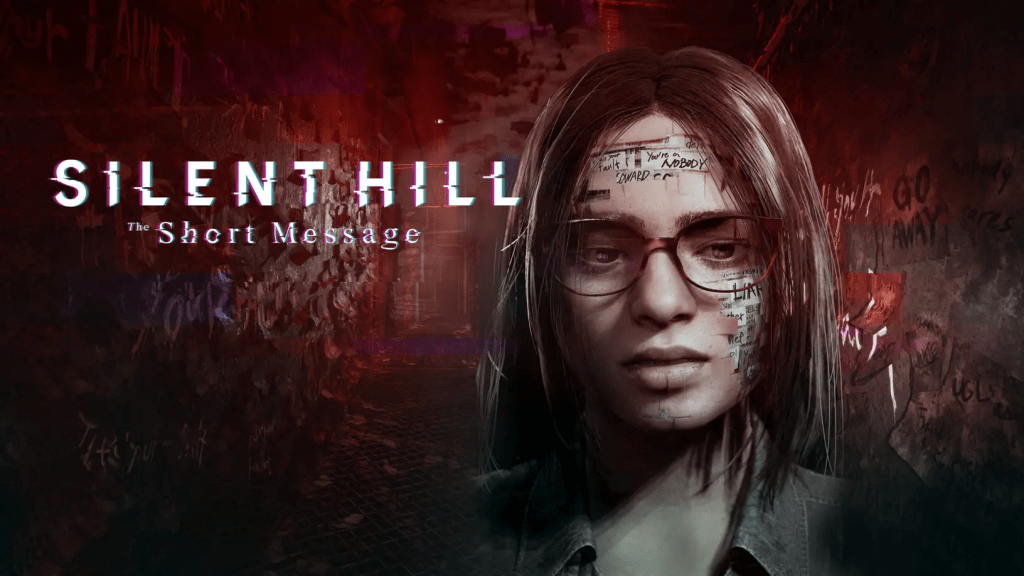
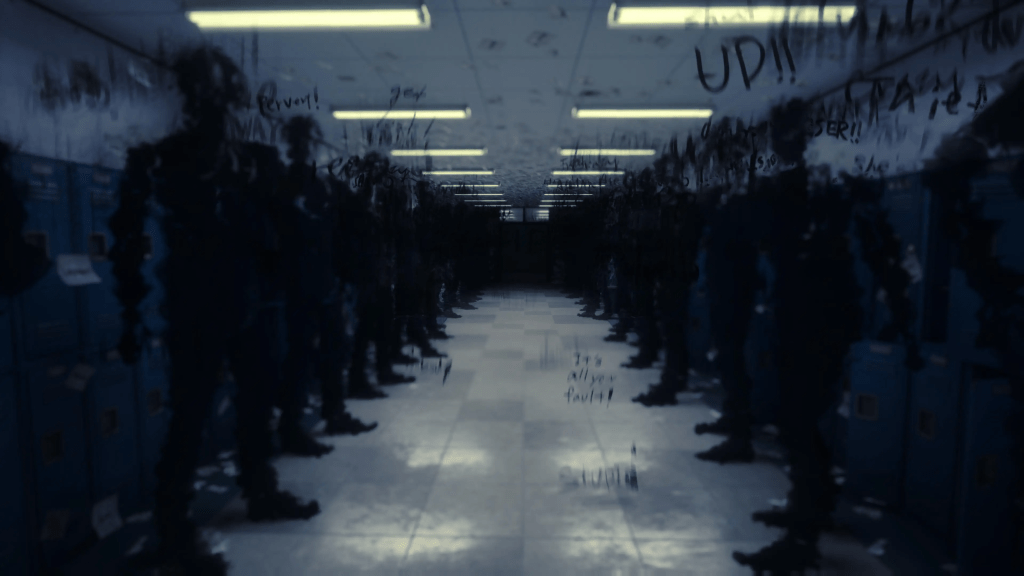
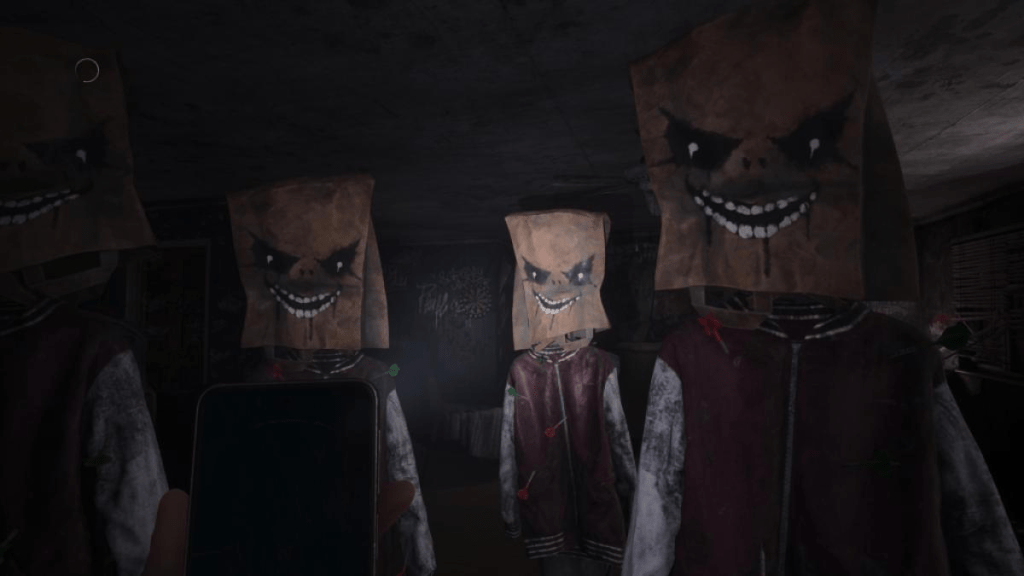
So let’s talk about The Short Message. In short (tee-hee), there’s more good here than bad. However, I think Short Message gets dangerously close to exploitation territory, and goes largely for easy, low-hanging thematic fruit. First and foremost, the game looks gorgeous. You play as teenager Anita, trapped in a looping, first-person European nightmare dealing with two of her friends, Maya and Amelie. If I asked you to pitch a story about a triangle of high school friends and the trauma/damages/struggles they underwent, I think almost anyone could come up with something less homogenous than what unfolds across the 90 minute-ish run time of Short Message. Your mom was abusive? Check. Relationship drama? Check. Projecting yourself onto those around you? Check. Bullying? Check. While these themes have universal appeal due to their relevance, that doesn’t mean they can’t be handled in a unique or original way.
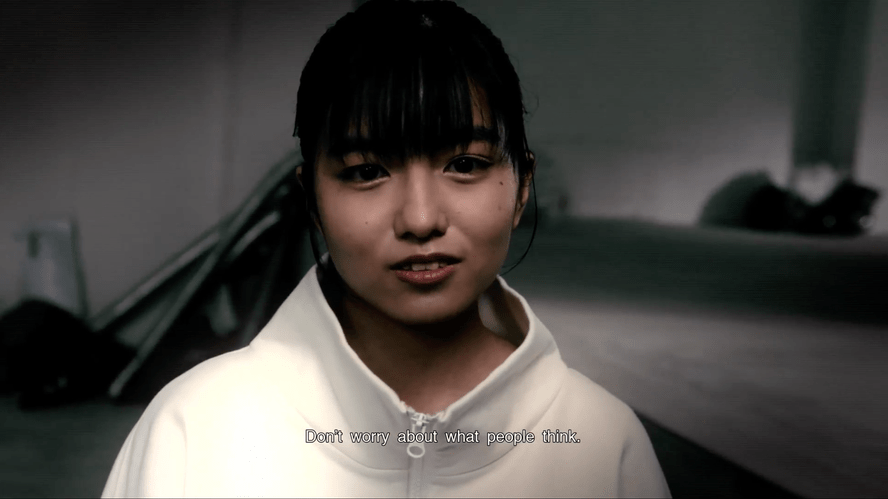
I didn’t love the live action, but keep doing weird shit!
You’ll spend your time walking around a villa slowly uncovering tidbits of story as you go from vision to vision. There are live action cutscenes involving the characters. I personally didn’t like this, but I love that they tried to do something different. At various points, you’ll have to run from some kind of flower monster to progress to the next narrative section.
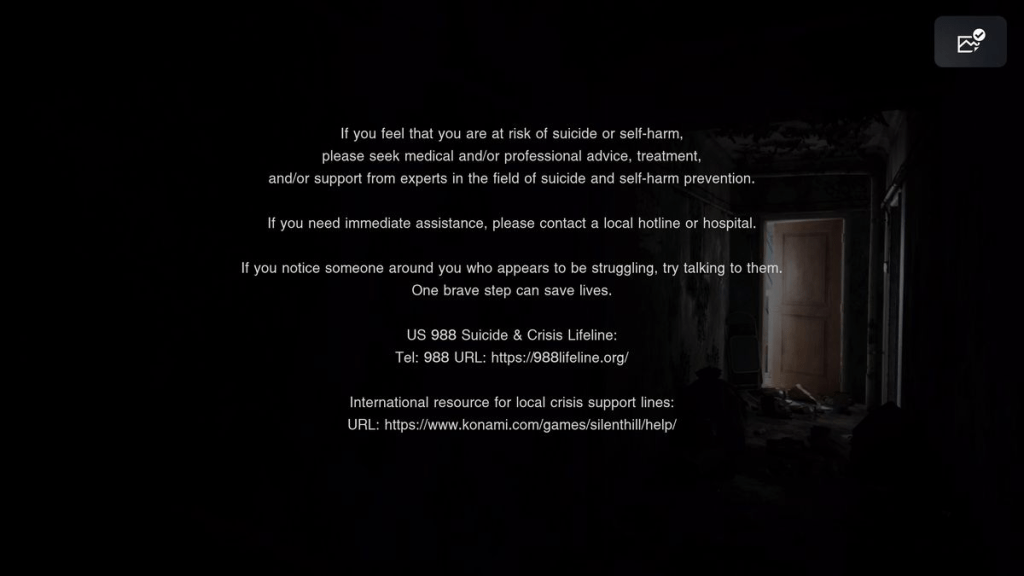
Speaking of sections, let’s get something out of the way: This game, to me, came sooooo close to exploiting the suicide themes. In the year of our lord, 2024, trigger warnings are not uncommon. So I was not surprised that upon booting up the game I was greeted by the following:
This seems a responsible thing to do.
As someone who has dealt with and continues to deal with depression and suicidal thoughts/ideation, I think this is great. If anything, increasing awareness of resources can only help. So where does the exploitation come in? Well, the State of Play trailer contained this warning:
Each time you progress to the next section of the narrative, you are again greeted a similar warning. And finally, again, at the conclusion of the game. Short message wears its damage proudly on its sleeve. Here be suicide. Again. and Again. And again. I recognize my own cognitive dissonance: I both admire this and have an issue with it. This is essentially the tokenization of mental illness. We need to make a Silent Hill game? OK. Where do we start. Well, the older games that everyone seems to love have characters that struggle through depression, loss, and all that stuff. Great! Let’s bring this shit into the 21st century and make sure everyone knows we’re going with the suicide angle. They’ll love that shit.
Sadly no mention of naughty pillows or blood buckets.
“Here was a game that tackled mature, complicated themes in a mature and complicated way.” This game, is not that game. It feels more like someone just kept throwing psychological damage tropes onto a pile until someone had to yell stop because the scale was overflowing. Suicide, depression, anxiety, isolation, all of these themes are universal, and serious, or, to take on the language of the mid-2000s ESRB rating MATURE. But that giant M on the packaging and the few lines explaining it on the reverse were all you had to go by. No expectation beyond that was set. If you are going into a mature experience, you might should expect to see things like this handled.
This just reminds me of Metal Gear Solid.
Silent Hill 2 is classic because it buries the lead. It doesn’t yell to you from across the isle that it’s character is suicidal, depressed. You have to unweave a complex story to find out what’s going on. It bears mentioning that I am a 36 year old man writing this. I do think this game took an interesting approach to reflecting the difficulties of the modern teenager as seen through the impenetrable fog of Silent Hill. I recognize that that experience is different than mine.
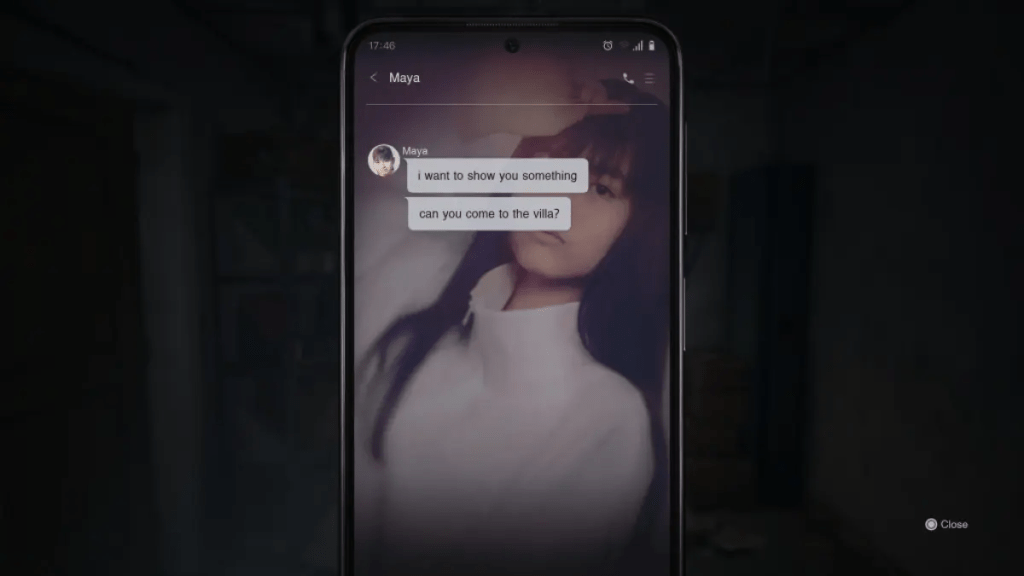
So Short Message. I loved the use of music in the game – something that is a common thread through all the Silent Hill games. Akira Yamaoka soundtracks are essentially the John Williams special sauce that make Spielberg’s masterpieces transcendent. I also thought the use of the cell phone was handled well here, but again, it’s very surface level. It’s your flash light and works well for some intense textual interactions. The possibilities are endless: make me manage the cell phone battery between using the flashlight and maybe playing a game that will keep my sanity from going to off the rails. I’m excited to see what subsequent games do here.
New phone who dis?
While not too scary in general, the game did get me extremely well in one sequence. It’s becoming harder and harder to pull off effective scares in video games without devolving into jump-scare-jerkfests. I won’t spoil it for you, but props to the designers for getting this done.
Everyone knew this guy in high school, right?
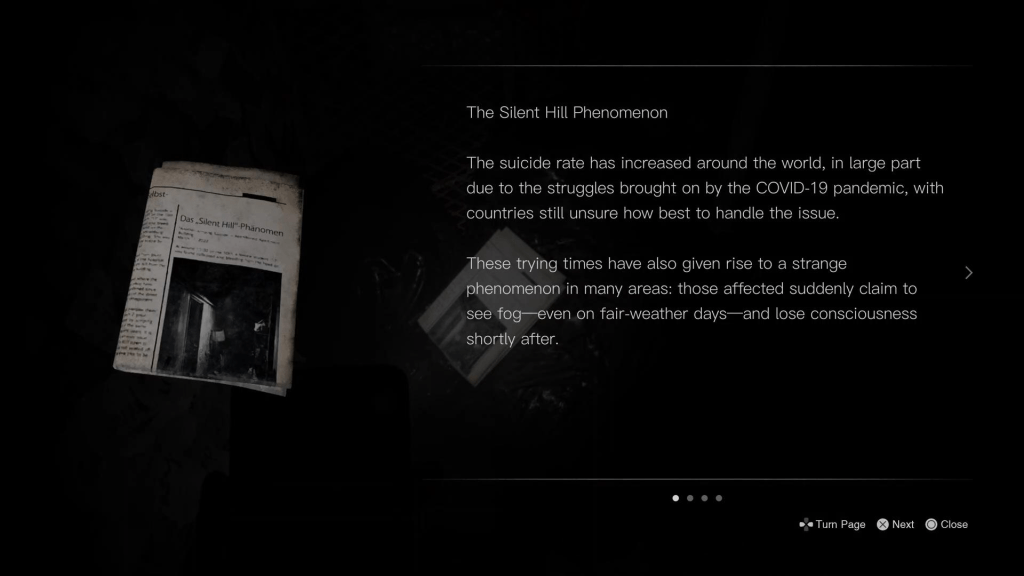
The game is pretty light on the Silent Hill. You run through corrupted cage-like mazes and gaze off into the distance at the fog enshrouded city around you. But there isn’t really anything tying the game into the larger mythos. Other than something that blew my mind!
Relating COVID fog to Silent Hill is very much my shit.
This is a passing reference in the game and isn’t addressed by the characters at all. What a concept! I hope this is a plant for what is coming in later games. Another design choice I really liked was the subtle use of perspective in a certain segment of the story. As you experience your character’s history with abuse, her viewpoint shrinks and shrinks, showing us what she saw as a child. As stated above, I don’t love how the topic of abuse was lumped in along with everything else, but I loved the execution of this.
Where does that leave us? I don’t regret the time I spent with Short Message – it’s hard to when it was free! And I love the concept of shadow dropping things unexpectedly. More of that please. I’m cautiously optimistic going forward.
We’ve been trying to reach you about your car’s extended warranty Henri!
Amnesia: The Dark Descent came out way back in 2010, and at the time it offered a revolutionary remix of survival horror experiences. Much like Tarantino pulling from his vast cinematic knowledge, the designers here did the same within the realm of video games. You’d experienced horror and survived with little to no equipment or weaponry before (Fatal Frame, Clock Tower); experienced and dealt with madness in addition to the physical manifestations of horror before (Eternal Darkness, TheSuffering); and come up against unstoppable monstrosities seemingly impervious to any method of attack or delay before (Resident Evil 3, Silent Hill 2). The product of this remix is an undisputed survival horror classic, and the first in a series of what would be, overall, consistent entries. However, like any good game mechanic or experience granting a dopamine hit in life, Amnesia games suffer from diminishing returns.
Grandma?
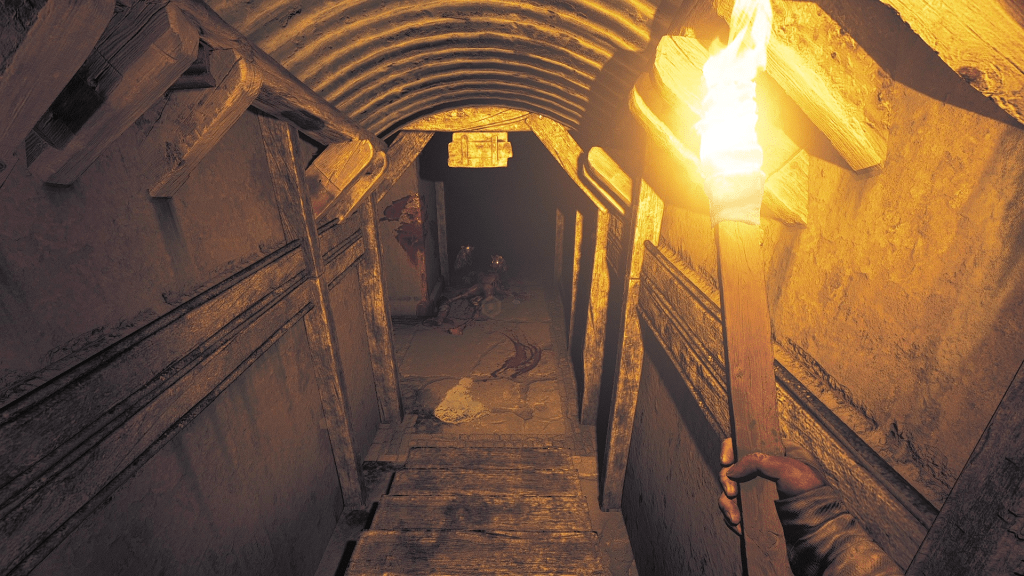
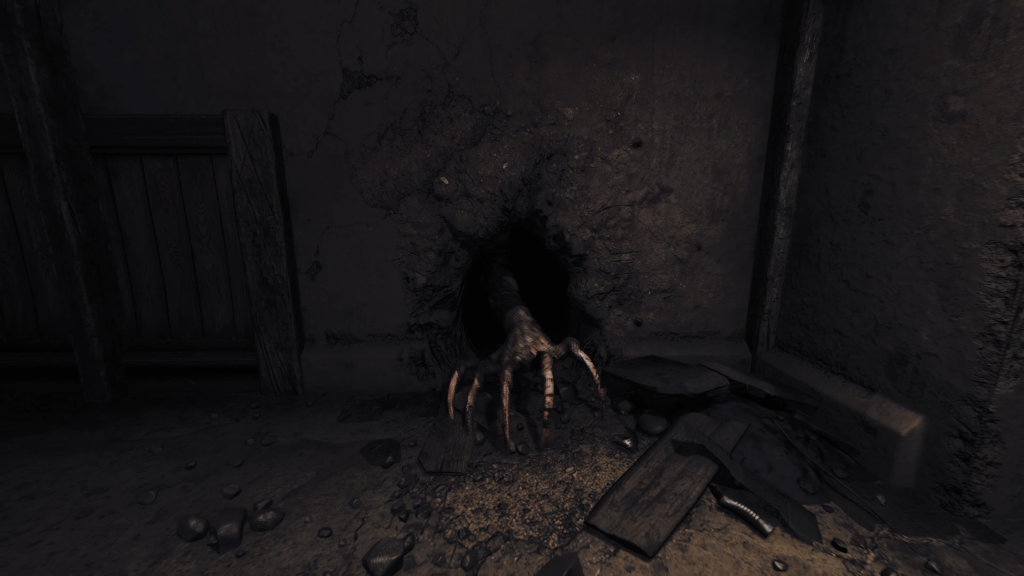
Amnesia: The Bunker takes the Amnesia formula, and improves upon it in almost every way, managing to feel both fresh and relevant amongst a sea of survival horror titles. Set in 1916 at the height of WWI, you step into the shoes of a French soldier, Henri Clement. After a brief introduction to the setting and mechanics, the true horror begins. Henri survives an artillery blast and wakes up in a dank, dark tomb: the bunker. From here to the end of the game you have one objective: escape the bunker. That’s it. The narrative unfolds across excellently-written notes and letters found throughout the nooks and crannies of the bunker. Between the poster art and the early warnings your deceased brothers in arms issue from the grave, you know that something unfathomable lurks these halls.
Didn’t you see my no soliciting sign?
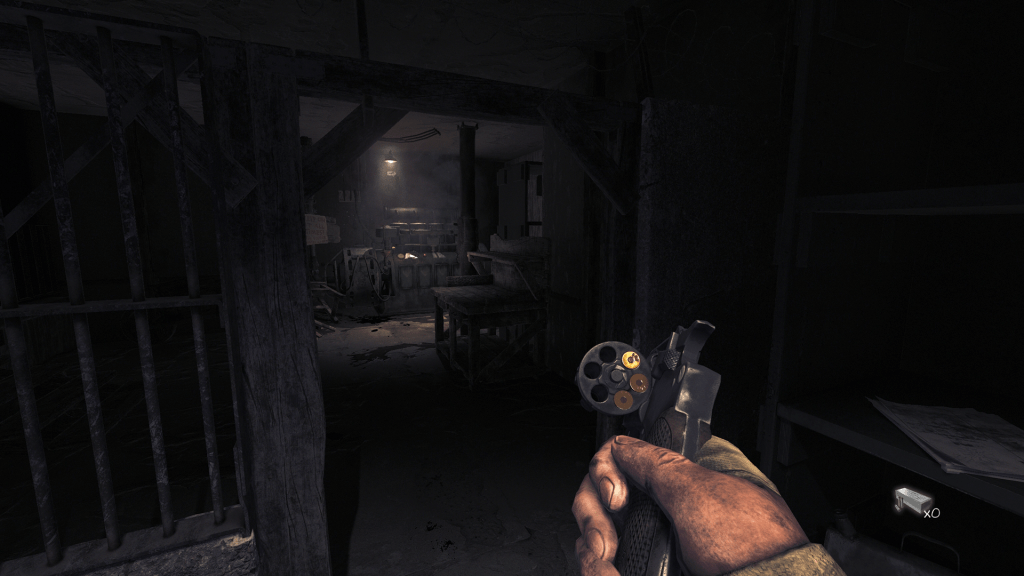
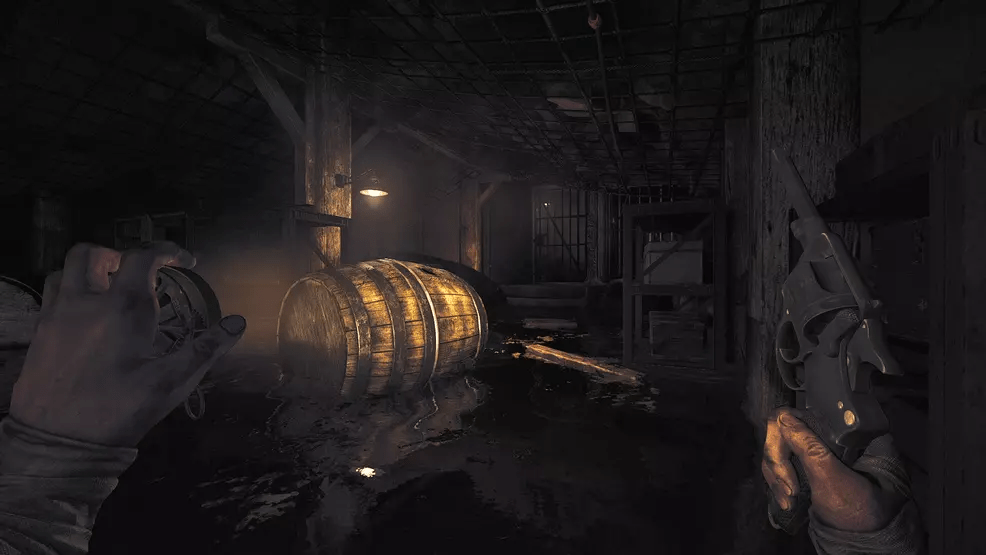
Unlike previous Amnesia entries, The Bunker is set in one of the largest warzones in human history, so it should come as no surprise that weapons of various kinds are available to you. Ammunition, on the other hand, is another story. The mental effect of the starting pistol cannot be understated. This piece of iron, this tube and trigger connected to rotating, six-chambered cylinder grants immediate succor. This revolver is your constant companion in the darkness, loyal in the face of your own failing wits. Even when the chambers are empty, it still manages to offer reassurances in the form of a tangible tool of defiance. The act of reloading the revolver, of flicking out the cylinder, shaking out spent shells, and then one by one inserting new ones is a symphony of tactile game design.
An elegant weapon for a more civilized age.
Along with the revolver, you’re given a flashlight unlike any encountered before in the annals of video game history: a few tugs of the drawstring attached to the power mechanism grants you a few precious moments of light. But this thing is loud, and if you didn’t know already, the thing lurking in the darkness doesn’t appreciate your loud noises. Would you rather creep silently in the darkness, or risk an appearance of the monster as your flashlight greedily devours the drawstring?
Let there be light!
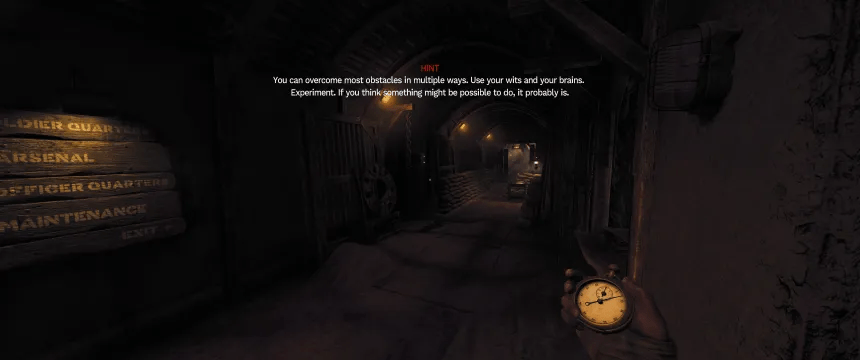
The Bunker is beautiful in its simplicity, which belies the complicated mechanics operating beneath. You are told early and often to use your wits and brains. “If you think something might be possible to do, it probably is.” I found this to be mostly true. A padlocked door can be bypassed in several ways: shoot the lock off, knock it off by throwing a brick at it, or simply blow it up. What you can’t do, and I’m sure everyone who plays this will try, is pick up the various tools and try to use them to open grates or other things that appear as though you should be able to. No, not that wrench. You need a special wrench.
Probably, but not definitely.
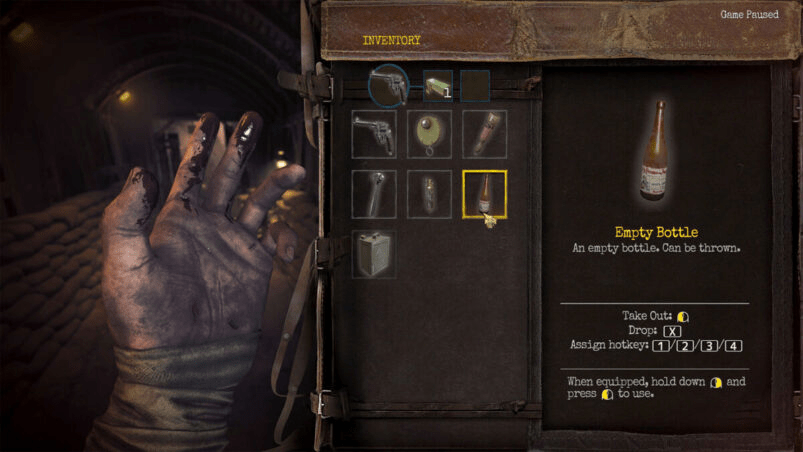
The final piece of the puzzle is the generator found beneath the save room. That’s right: it’s possible to turn on the lights in the bunker for extended periods of time. All you need to do is keep it fueled up and running. A stopwatch helps you keep track of remaining fuel so you aren’t caught in the darkness. But in tradition of the best survival horror experiences, inventory space is extremely limited. Would you rather lose a slot to that stopwatch? Or take another can of fuel? Along with the inventory screen, you’ll be presented with an elegantly simple health meter: Henri’s hand and the presence or lack of blood.
I’m willing to do unsavory things to increase my inventory slots.
The easiest comparison to make to The Bunker is 2014’s instant classic Alien: Isolation. The setups of both games are quite similar, and both feature the same core horror mechanic: an undying, unyielding, and inescapable stalker. With a similar core mechanic inevitably comes similar pain points. The ever-present xenomorph is ruthless, and those who survived to tell the tale of Sevastopol Station had endless accounts of being murdered within inches of a save point, only to run the gauntlet again, and again, and again. The same is true in The Bunker. Managing to riff on push your luck elements straight out of roguelites, Henri must make a series of mad dashes out into the depths of the bunker to gather the tools required to blow the entrance. You’ll get very good at planning your routes: deaths resulting from slightly blocked passageways, wrong turns, and doors you forgot to unlock will do that.
Bunba?
The Bunker tells a story that feels perfect for its size. The heartbreaking reality of what has unfolded beneath the war-torn earth will haunt you for days afterward. Small moments of real-world horror devastatingly punctuate the otherworldly ones. Once you finally gain access to the pillbox, you are rewarded with a glorious taste of the outside world. But you are still in a warzone, and the enemy is still trying to kill you. Your brief reverie is shattered by the crack of rifle fire. The true horror lies not within the bunker, but without, a real-life horror that changed the world forever.


 Bits in the Belfry