
For what it’s worth, I don’t plan to only drop a new post every six months or so. It just sort of happens that way. But the only way to change that metric is to do exactly what I’m doing now! Anyway, been reading a lot lately, and one of the things I’ve burned through was Gene Wolf’s Book of the New Sun. Severian and his moody world wasn’t even on my radar prior to someone else’s pick for a book club read. The cover looks cool enough, and the whisperings I heard from the group going into the assignment included words like “seminal” and “award-winning” and “one-of-the-best”.
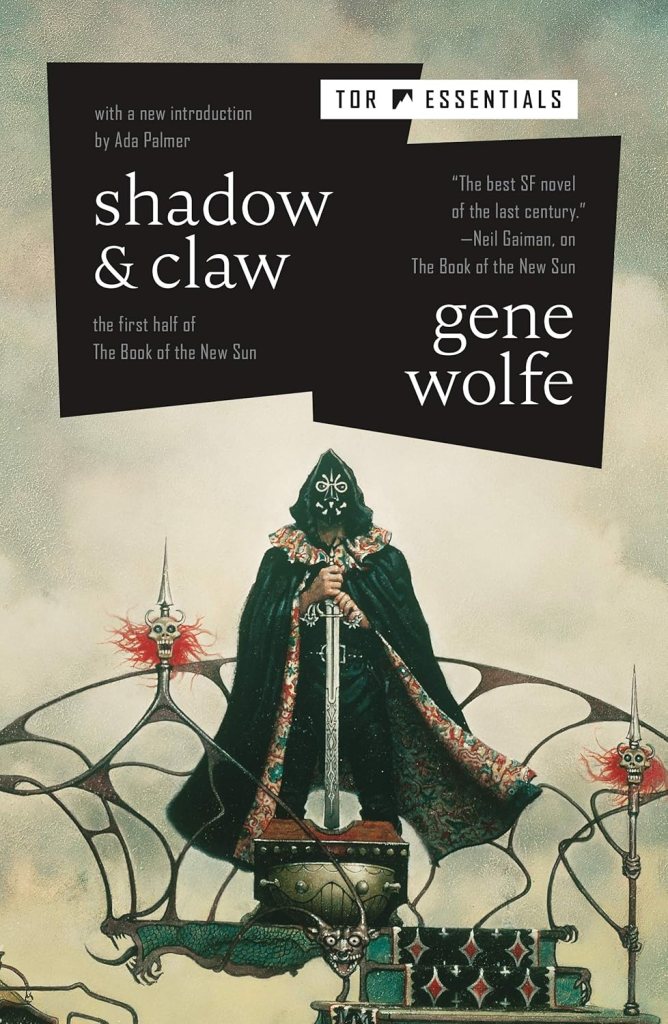
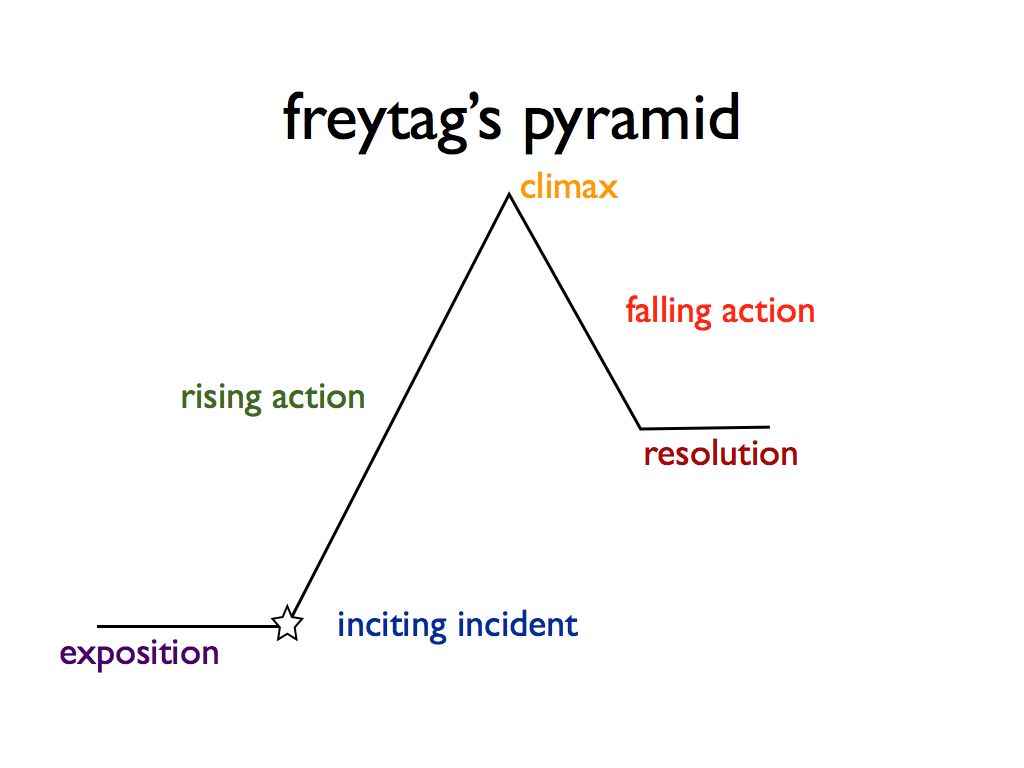
For those who haven’t dipped their wicks into The Book of the New Sun, let me tell you three things I learned almost immediately: 1) Dude loves him some antiquated, esoteric, and downright impenetrable vocabulary. Seriously, there were words in here that, when researched, only return results going back to people asking about what the word means on a fantasy forum or reddit. 2) This is one of those unreliable, my (pro?)tagonist-may-or-may-not-be-the-worst-guy-ever sort of narratives. 3) Mr. Wolf is totally fine with you not knowing what the hell is going on for large swaths of the book. By large swaths, I mean pretty much the entirety of the tetralogy. Oh, and 4) I fairly quickly came to question how and why anyone would consider these works as anything other than pretentious wank that didn’t go anywhere or even bother to tell a fully-constructed, traditional narrative. You know, like the pyramid taught us about?
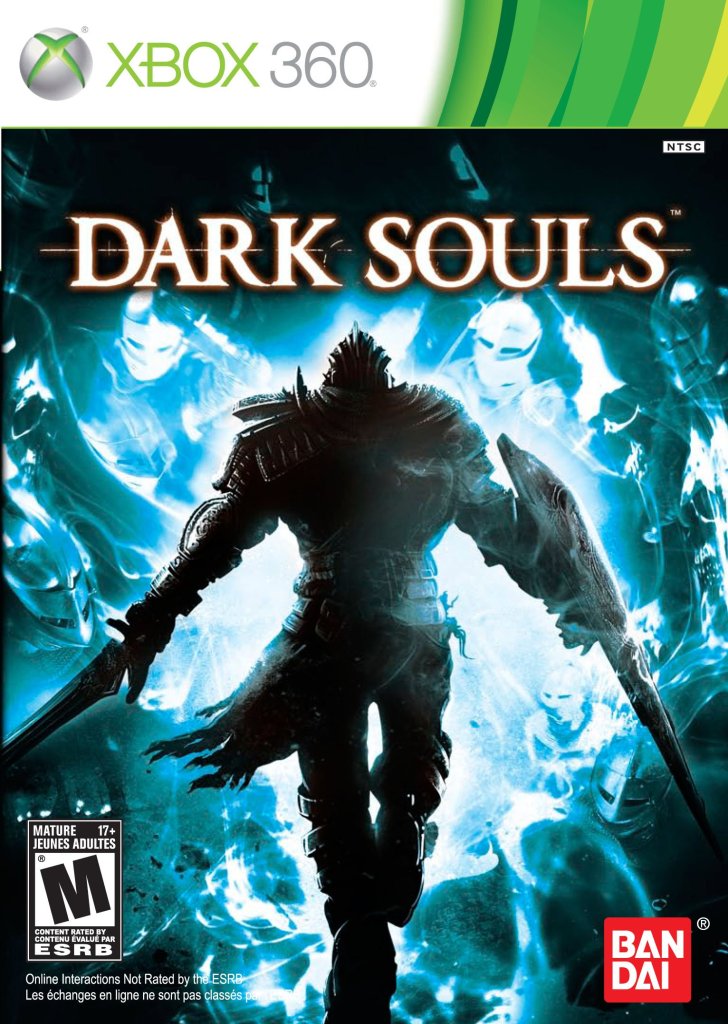
The first time I played Dark Souls, I quit after about an hour. The second time I played Dark Souls., I made it a little bit longer. The third time I did worse than either previous attempt, angrily ejecting the disc and throwing the case back at my roommate (so-called best friend). I couldn’t understand all the praise, all the accoladed, why my friend had done this to me. But while I stewed, something inside me stewed back. The game had its hooks in me, and it was only a matter of time before I picked it back up and tried again and again and again. The thing about Dark Souls, and, as I came to learn, Souls games in general, is that everything you hear about them is true. They are brutal but fair, can be unforgiving, and on the surface have no story whatsoever. At the end of the day, Dark Souls gives more than it takes. And this simple truth is why I believe it is the single most important event in the modern era of the gaming experience.
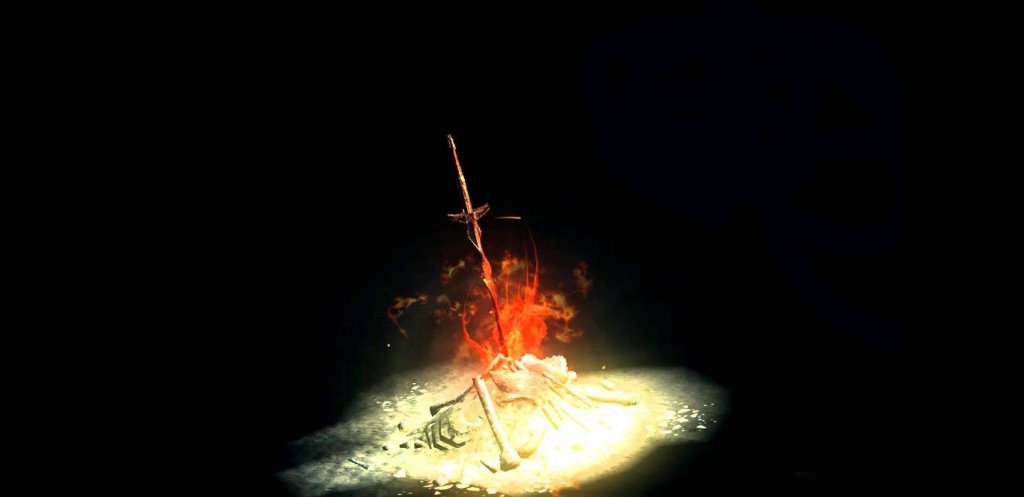
Dark Souls was a hard reset that made me realize how automatous my gaming had become. Certainly there isn’t anything wrong with enjoying linear, autopilot-like experiences. Just like there isn’t any wrong way to enjoy a game. Maybe the difference with Dark Souls was that it pushed back significantly harder than any other game I had played since childhood. It bucked hard, kicking me in the mouth and bloodying my lip. It was upsetting! Why was this experience under my dominion pressing back upon me so? Who did it think it was? I’ve come to liken Dark Souls to an intervention, one that I hope everyone of every facet along the spectrum of gamer is lucky enough to experience. So there I was having finally made it through the gauntlet, taken down the final boss and started on my first journey into New Game+. I couldn’t help but wonder, where was the story?
Bouncing back to Urth and the adventures of the guy you definitely wouldn’t want dating your sister: Severian – I was hooked from the beginning of the first book, The Claw of the Conciliator. You’re thrown into a world that antiquated doesn’t even begin to describe, one, like a coral reef, that has been layered upon and layered upon and layered upon for thousands of years until you stumble in and have no idea what’s happening. And Mr. Wolf doesn’t tell you. Ever. Severian, the main character, is an apprentice in the Guild of Torturers and does…pretty much exactly what you’d expect. He tortures and kills people. But not with any kind of ordinary tortureresque outlook. Without going deep on plot details, I was ready for more when I finished book one. Very quickly into book two I found myself asking what all the hubbub was about. It felt like nothing was happening. No concrete details were given. The story was comprised of thinly veiled allusions packaged inside crumbling concrete whispers. I’ll be honest: it left be frustrated and a bit bummed. What were all these people prattling on about? How could this be so celebrated? I tossed it, much in the same fashion as Dark Souls years prior, onto a pile to be forgotten. However, much like Dark Souls, I felt the pull of the narrative and soon found myself face to face with this guy.
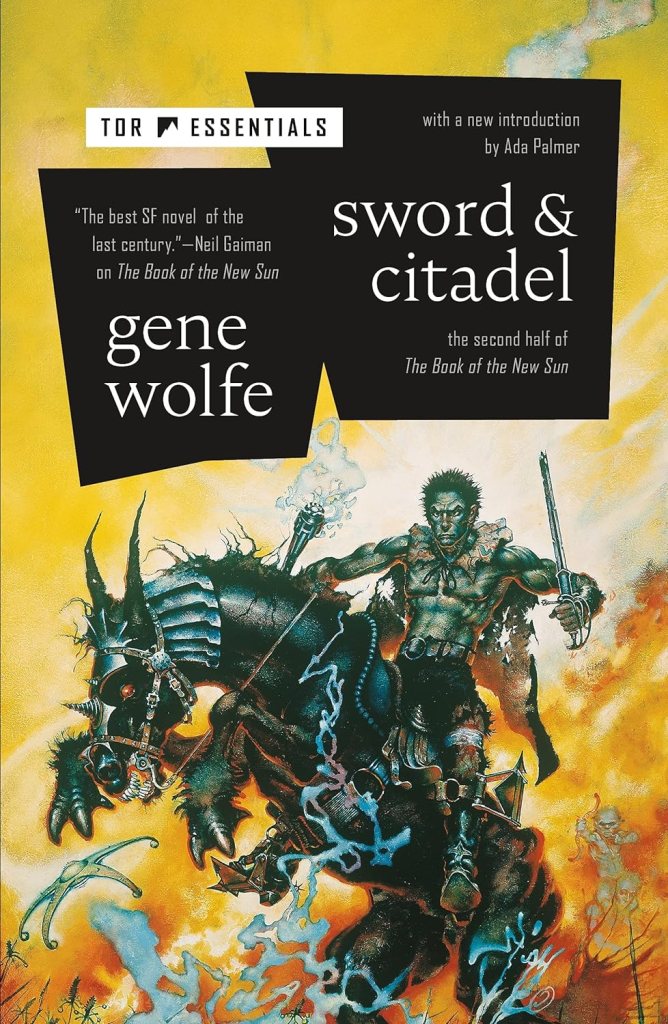
A funny thing happened almost immediately upon starting: I found my criticisms and issues disappearing. They left a void that became filled with wonder. The Book of the New Sun, like Dark Souls, demands a higher price than virtually anything else in a similar category. And the returns on your investment will dwarf the cost. Even now I’m not sure I can explain how I went from a skeptic to a believer, but I felt it happen in real time. I wondered along my journey through Urth, whether there would be something at the end which made everything that had come before make sense in some new light. Here’s something I will spoil for you: there isn’t. No grand reveal, no illuminating recontextualization. You get to the end with more questions than you had at the beginning. And it’s incredible.

Let’s jump back to the story in Dark Souls. If you thought the world of Severian was bleak, just you wait. The kingdom of Lordran in just as layered, just as patinaed in blood and tears, and just as dense as anything found on Urth. But outside of the direct actions you take – who you kill, who you save – where is the story? Dark Souls largely tells its tale contextually, as does The Book of the New Sun. You don’t get direct A to B to C. You get an item description that references a piece of something that happened a hundred years ago. You don’t get inciting incident to climax to resolution, you get the dialogue of characters that may or may not be trustworthy.
From a writer’s perspective, I learned many things from Gene Wolf. Chief among them being to trust the intelligence and capabilities of your audience. Passionate, intentional writing, no matter how dense or impenetrable-seeming at the outset, can be transcendent. Things that are difficult often reward continual and repeat study, and I feel so lucky to have discovered two such things that happen to exist in two of my areas of passion. I can only hope that in a similar way, 40 years from now gamers are still discovering Dark Souls reveling in its formative foundry. So Praise the Sun! And Praise the Book of the New Sun!
 Bits in the Belfry