
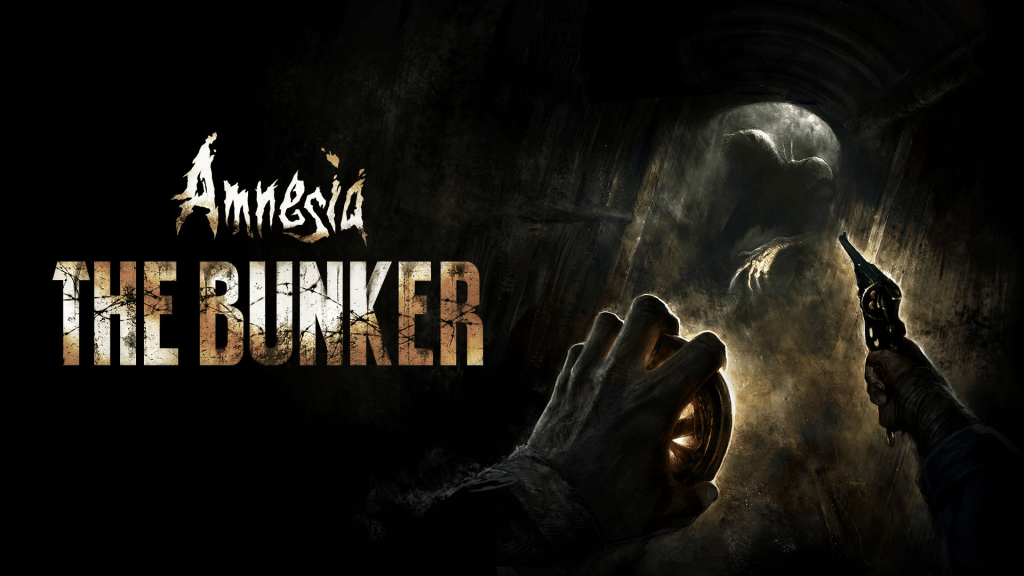
Amnesia: The Dark Descent came out way back in 2010, and at the time it offered a revolutionary remix of survival horror experiences. Much like Tarantino pulling from his vast cinematic knowledge, the designers here did the same within the realm of video games. You’d experienced horror and survived with little to no equipment or weaponry before (Fatal Frame, Clock Tower); experienced and dealt with madness in addition to the physical manifestations of horror before (Eternal Darkness, The Suffering); and come up against unstoppable monstrosities seemingly impervious to any method of attack or delay before (Resident Evil 3, Silent Hill 2). The product of this remix is an undisputed survival horror classic, and the first in a series of what would be, overall, consistent entries. However, like any good game mechanic or experience granting a dopamine hit in life, Amnesia games suffer from diminishing returns.
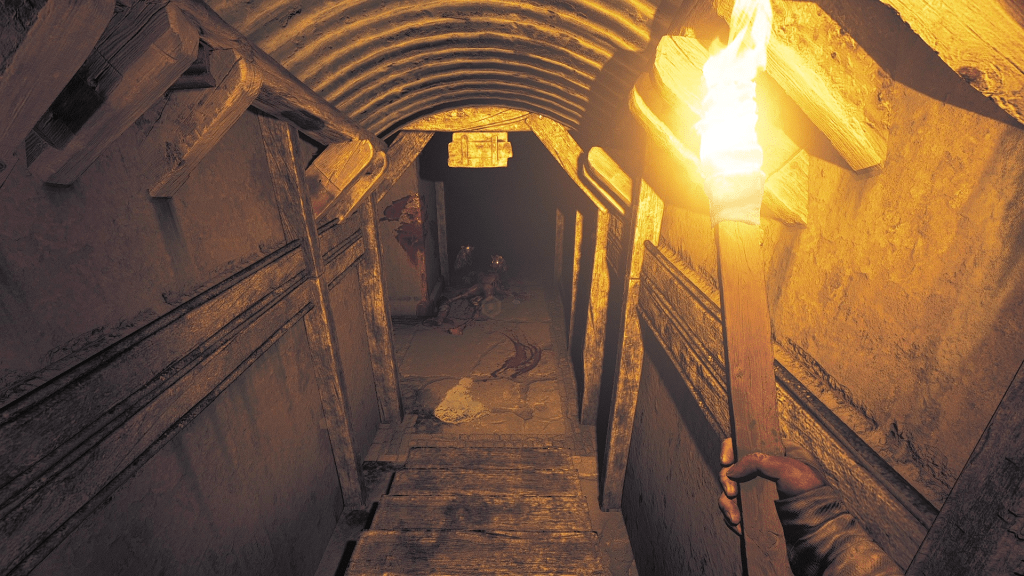
Amnesia: The Bunker takes the Amnesia formula, and improves upon it in almost every way, managing to feel both fresh and relevant amongst a sea of survival horror titles. Set in 1916 at the height of WWI, you step into the shoes of a French soldier, Henri Clement. After a brief introduction to the setting and mechanics, the true horror begins. Henri survives an artillery blast and wakes up in a dank, dark tomb: the bunker. From here to the end of the game you have one objective: escape the bunker. That’s it. The narrative unfolds across excellently-written notes and letters found throughout the nooks and crannies of the bunker. Between the poster art and the early warnings your deceased brothers in arms issue from the grave, you know that something unfathomable lurks these halls.
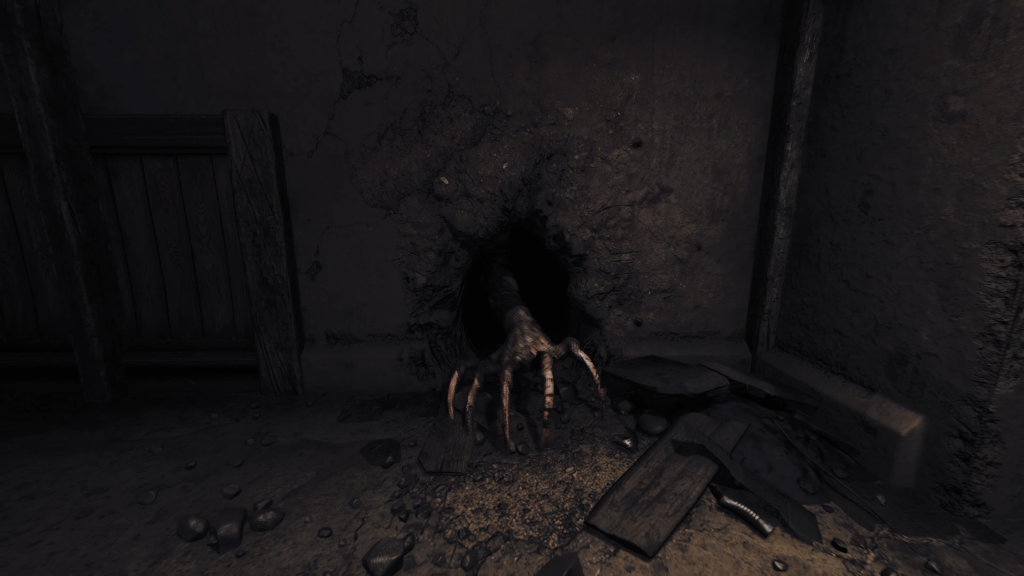
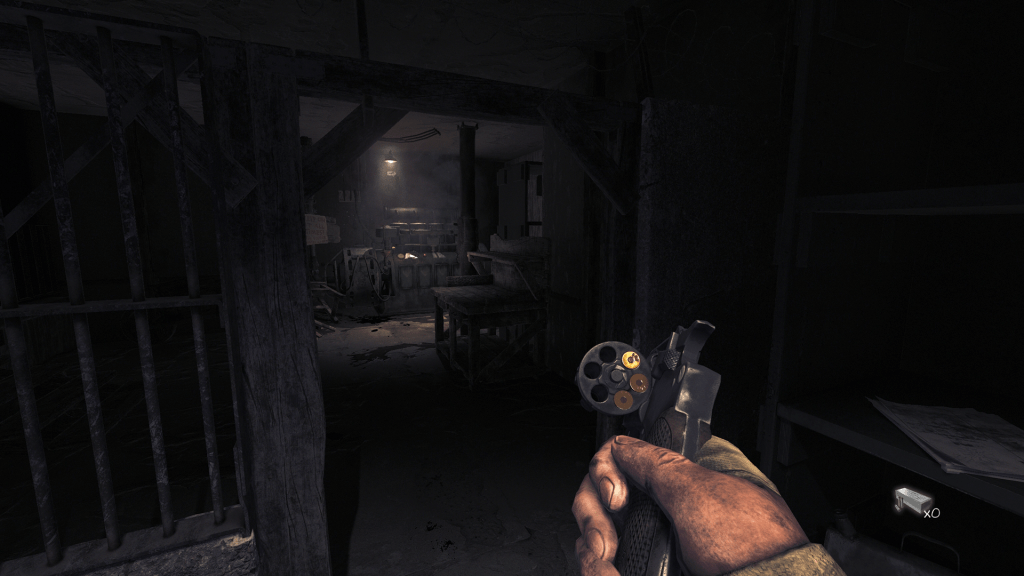
Unlike previous Amnesia entries, The Bunker is set in one of the largest warzones in human history, so it should come as no surprise that weapons of various kinds are available to you. Ammunition, on the other hand, is another story. The mental effect of the starting pistol cannot be understated. This piece of iron, this tube and trigger connected to rotating, six-chambered cylinder grants immediate succor. This revolver is your constant companion in the darkness, loyal in the face of your own failing wits. Even when the chambers are empty, it still manages to offer reassurances in the form of a tangible tool of defiance. The act of reloading the revolver, of flicking out the cylinder, shaking out spent shells, and then one by one inserting new ones is a symphony of tactile game design.
Along with the revolver, you’re given a flashlight unlike any encountered before in the annals of video game history: a few tugs of the drawstring attached to the power mechanism grants you a few precious moments of light. But this thing is loud, and if you didn’t know already, the thing lurking in the darkness doesn’t appreciate your loud noises. Would you rather creep silently in the darkness, or risk an appearance of the monster as your flashlight greedily devours the drawstring?
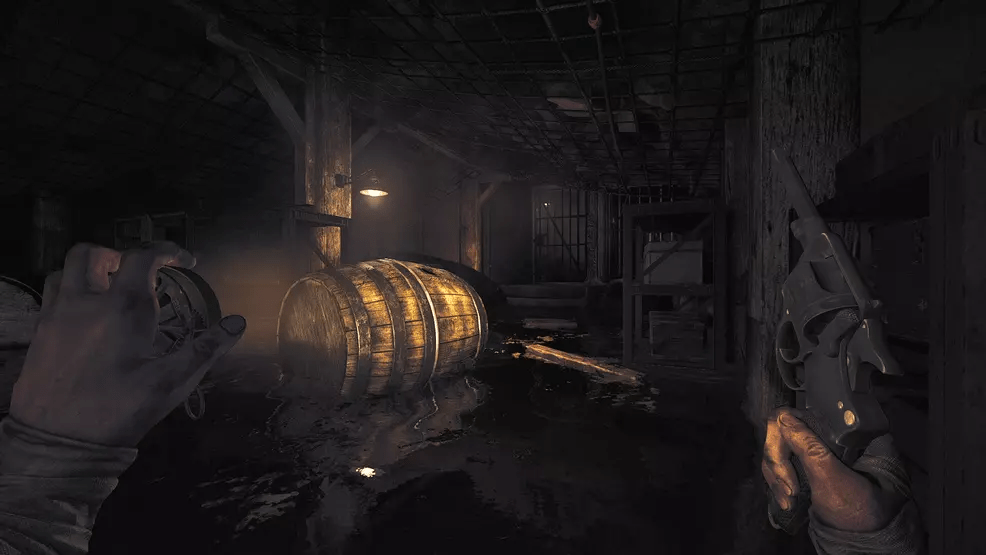
The Bunker is beautiful in its simplicity, which belies the complicated mechanics operating beneath. You are told early and often to use your wits and brains. “If you think something might be possible to do, it probably is.” I found this to be mostly true. A padlocked door can be bypassed in several ways: shoot the lock off, knock it off by throwing a brick at it, or simply blow it up. What you can’t do, and I’m sure everyone who plays this will try, is pick up the various tools and try to use them to open grates or other things that appear as though you should be able to. No, not that wrench. You need a special wrench.
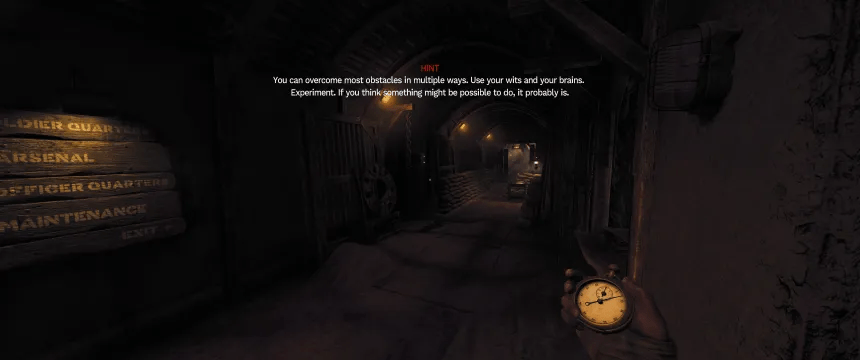
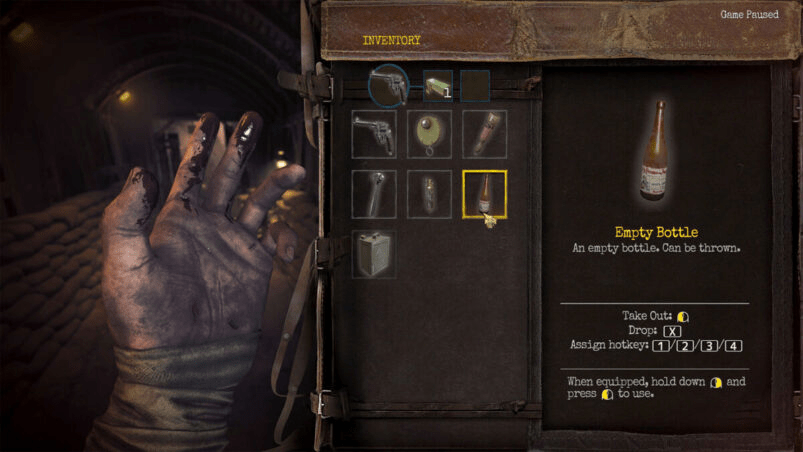
The final piece of the puzzle is the generator found beneath the save room. That’s right: it’s possible to turn on the lights in the bunker for extended periods of time. All you need to do is keep it fueled up and running. A stopwatch helps you keep track of remaining fuel so you aren’t caught in the darkness. But in tradition of the best survival horror experiences, inventory space is extremely limited. Would you rather lose a slot to that stopwatch? Or take another can of fuel? Along with the inventory screen, you’ll be presented with an elegantly simple health meter: Henri’s hand and the presence or lack of blood.
The easiest comparison to make to The Bunker is 2014’s instant classic Alien: Isolation. The setups of both games are quite similar, and both feature the same core horror mechanic: an undying, unyielding, and inescapable stalker. With a similar core mechanic inevitably comes similar pain points. The ever-present xenomorph is ruthless, and those who survived to tell the tale of Sevastopol Station had endless accounts of being murdered within inches of a save point, only to run the gauntlet again, and again, and again. The same is true in The Bunker. Managing to riff on push your luck elements straight out of roguelites, Henri must make a series of mad dashes out into the depths of the bunker to gather the tools required to blow the entrance. You’ll get very good at planning your routes: deaths resulting from slightly blocked passageways, wrong turns, and doors you forgot to unlock will do that.
The Bunker tells a story that feels perfect for its size. The heartbreaking reality of what has unfolded beneath the war-torn earth will haunt you for days afterward. Small moments of real-world horror devastatingly punctuate the otherworldly ones. Once you finally gain access to the pillbox, you are rewarded with a glorious taste of the outside world. But you are still in a warzone, and the enemy is still trying to kill you. Your brief reverie is shattered by the crack of rifle fire. The true horror lies not within the bunker, but without, a real-life horror that changed the world forever.
 Bits in the Belfry